
Author: Lord Fiifi Quayle
Abstract
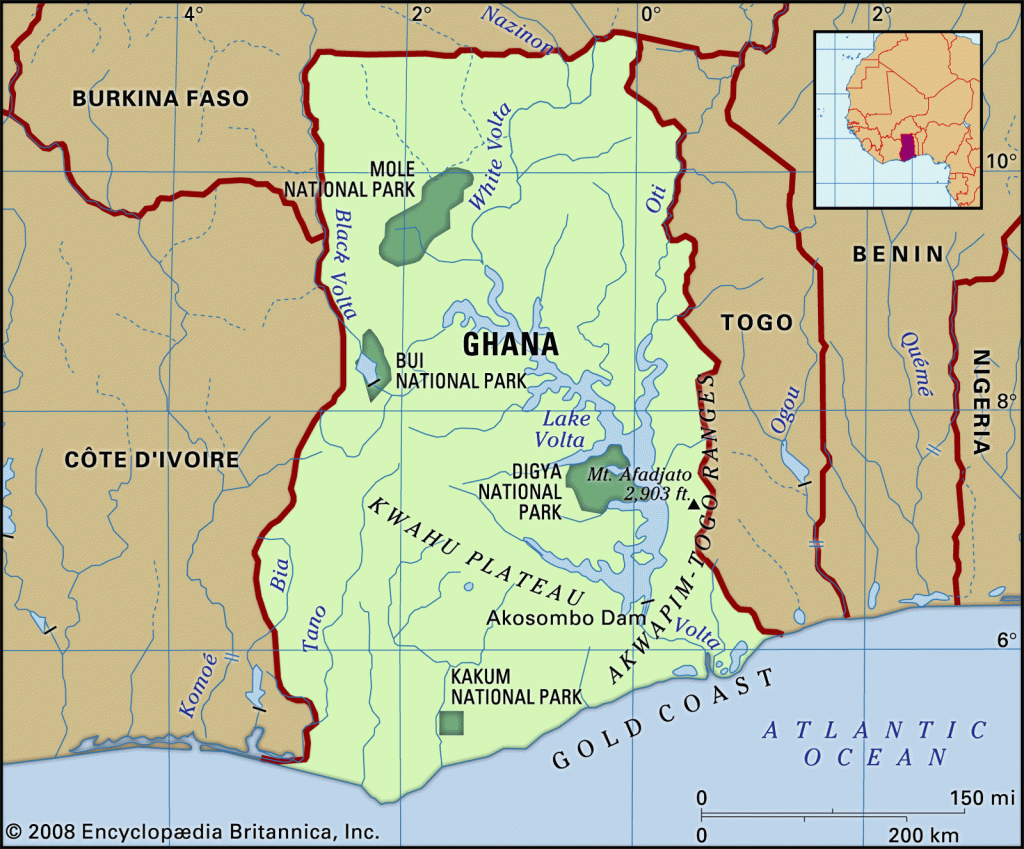
This paper presents an in-depth, data-driven analysis of the Republic of Ghana in the pivotal year of 1984. Drawing primarily from official government figures, the 1984 Population Census, and contemporary economic reports, the study maps the nation’s political, demographic, and macroeconomic landscape under the Provisional National Defence Council (PNDC) military dictatorship. The analysis reveals a nation at a critical juncture: politically centralized under a military regime, demographically characterized by a young, rapidly growing, and predominantly rural population, and economically grappling with the nascent, yet painful, implementation of the International Monetary Fund (IMF) and World Bank-backed Economic Recovery Program (ERP). Key findings highlight severe inflationary pressures, a high external debt burden, and significant challenges in social infrastructure, particularly in health and education, underscoring the profound developmental hurdles facing the West African state.
1. Introduction: Ghana 1984
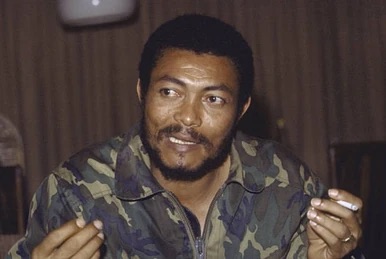
The year 1984 marked a watershed moment in Ghana’s post-independence history. Following the December 1981 coup d’état, the nation was governed by the Provisional National Defence Council (PNDC), a military dictatorship led by its Chairman, Flight Lieutenant Jerry John Rawlings. This political structure, which induced civilians to participate in governance while maintaining ultimate military authority, defined the state’s formal identity. The official name remained the Republic of Ghana, with Accra as the capital and English as the official language.
Economically, 1984 was the first full year of the Economic Recovery Program (ERP), launched in April 1983 in consultation with the IMF and World Bank. The ERP was a radical shift from previous populist policies, aiming to stabilize the collapsing economy through market-oriented reforms, currency devaluation, and fiscal discipline. The data presented herein provides a statistical snapshot of the nation at the beginning of this arduous structural adjustment journey.
2. Political Structure and Macroeconomic Instability
2.1. The PNDC and Fiscal Policy
The political environment was one of centralized military rule, with the PNDC acting as the sole ruling body. The monetary unit was the cedi (¢), valued at 100 pesewas. The official exchange rate as of October 29, 1984, reflected the severe economic pressures and the initial devaluations under the ERP: Currency Valuation (October 29, 1984) 1 U.S. Dollar ¢38.69 1 British Pound (£) ¢46.70
The national budget for the 1982-83 fiscal year indicated a significant imbalance, with expenditures (¢9,778.1 million) nearly double the income (¢4,642.5 million). A striking feature of the expenditure profile was the high cost of servicing the national debt, which consumed 22.1% of the total budget. Education, despite its importance, accounted for 18.3% of expenditures, while economic services, including agriculture, received 12.4%. The external public debt, outstanding in 1982, stood at a substantial U.S.$1.233 billion.
2.2. The Scourge of Hyperinflation
Perhaps the most dramatic indicator of the economic crisis that necessitated the ERP was the rampant inflation. Using 1980 as the base year (Index = 100), the Consumer Price Index (CPI) had soared to 836.88 by 1984. This nearly nine-fold increase in the cost of living over four years highlights the devastating impact of hyperinflation on the Ghanaian populace and the urgent need for the PNDC’s stabilization measures. The Gross National Product (GNP) in 1981 was estimated at U.S. $4.8 billion, translating to a low per capita GNP of U.S.$400.
3. Demographic and Regional Profile
The 1984 Population Census provided the definitive demographic baseline for the nation. Ghana’s total area was 92,100 square miles (238,538 sq km), supporting a population of 12,205,576 people.
3.1. Regional Distribution
The population was unevenly distributed across the ten administrative regions, as detailed in the census: Region Capital Area (sq mi) Population (1984 Census) Ashanti Kumasi 9,417 2,089,683 Brong-Ahafo Sunyani 15,273 1,179,409 Central Cape Coast 3,794 1,145,520 Eastern Koforidua 7,713 1,679,483 Greater Accra Accra 1,001 1,420,066 Northern Tamale 27,175 1,162,645 Upper East Bolgatanga 3,414 771,584 Upper West Wa 7,134 439,161 Volta Ho 7,943 1,201,095 Western Sekondi-Takoradi 9,236 1,116,930 TOTAL92,100 12,205,576
The Ashanti Region was the most populous, a trend consistent with earlier censuses [5]. The overall population density was 132.5 persons per square mile.
3.2. Demographic Dynamics and Composition
Ghana’s population exhibited characteristics typical of a developing nation with high growth potential. The population was overwhelmingly young, with 46.6% of the population under the age of 15 (1980 data). The high natural increase rate of 32.7 per 1,000 population (1980-85) was significantly above the world average (16.9), driven by a high birth rate (48.2 per 1,000) and a total fertility rate of 6.7 average births per childbearing woman. The projected doubling time was a rapid 23 years.
The ethno-linguistic composition (1978) was dominated by the Akan group (52.6%), followed by Mossi-Dagomba (15.9%), Ewe (11.8%), and Ga-Adangme (7.6%). Religious affiliation (1983) showed a pluralistic society, with Christianity (43%) and Traditional beliefs (38%) being the two largest groups, followed by Islam (12%).
4. Economic Production and Trade
4.1. Production and Sectoral Activity
The Ghanaian economy in the early 1980s was heavily reliant on the primary sector. Agriculture, forestry, and fishing contributed significantly to the economy, with major crops including cassava (1.7 million metric tons), yams and cocoyams (1.5 million metric tons), and the crucial export crop, cacao (190,000 metric tons in 1983).
The mining sector was active, producing manganese ore, bauxite, diamonds (336,600 carats), and gold (8,606 kg in 1983). The manufacturing sector, though small, produced refined petroleum products, cocoa derivatives, and consumer goods like beer and cigarettes.
The structure of the economically active population (1981) reflected this reliance on the primary sector: Sector Percent of Economically Active Population Agriculture 50.9% Trade 29.8% Manufacturing 5.9% Transportation and Communication 2.1% Finance 2.0% Construction 1.9% Mining 0.5% Public Utilities 0.5% Public Administration, Defense, Services 0.5%
4.2. Foreign Trade Dependence
Ghana’s foreign trade was characterized by a high dependence on a single commodity: cocoa. In 1979, cocoa and its derivatives accounted for 80.4% of total exports, with aluminum being the second largest export (8.3%). This monoculture vulnerability was a major factor in the nation’s economic instability. Major import categories included chemicals (16.1%), crude petroleum (16.1%), and transport equipment (15.1%).
The balance of trade was volatile, swinging from a deficit of ¢117.0 million in 1981 to a surplus of ¢463.0 million in 1982. This surplus, however, must be interpreted in the context of severely restricted imports due to foreign exchange shortages, rather than robust export growth [6].
5. Social Infrastructure and Human Development
The human development indicators for Ghana in the early 1980s revealed significant challenges in health and education.
5.1. Health and Vital Statistics
The health profile was marked by low life expectancy and high infant mortality. Life expectancy at birth (1980-85) was 49.1 years for males and 52.5 years for females, far below global averages. The infant mortality rate (1975-80) was a high 107.0 per 1,000 live births. The physician-to-population ratio in 1979 was one physician for every 7,630 persons, indicating a severe shortage of medical personnel. Major infectious diseases, including malaria, tuberculosis, and onchocerciasis, were cited as significant causes of morbidity and mortality.
Furthermore, the daily per capita caloric intake (1978-80) was 2,016, meeting only 88% of the FAO minimum recommended requirement, suggesting widespread nutritional insecurity.
5.2. Education and Literacy
Literacy rates, based on late 1970s data, were low, with only 31% of the total population literate. A significant gender disparity was evident, with male literacy at 41% and female literacy at a mere 18%. Despite this, the education sector was a major recipient of government expenditure. In the 1982-83 academic year, the student-to-teacher ratio was 30.8 in primary schools and 19.9 in secondary schools, suggesting a relatively high commitment to educational access, even amidst the economic crisis.
6. Conclusion
Ghana in 1984 was a nation defined by the confluence of political authoritarianism and economic reform. The PNDC, under Chairman Rawlings, had committed the country to the ERP, a program designed to reverse years of economic decline. The statistical data from the period paints a clear picture of the scale of the challenge: a rapidly expanding population, a high dependence on cocoa exports, a crippling external debt, and the destabilizing effects of hyperinflation. While the ERP was intended to lay the foundation for future growth, the immediate reality in 1984 was one of austerity and hardship. The demographic pressures and the underdeveloped state of social infrastructure, particularly the low life expectancy and literacy rates, underscored the deep-seated developmental issues that the economic recovery program was only beginning to address. The year 1984 thus stands as a critical reference point for understanding the subsequent trajectory of Ghana’s political economy and its path toward stabilization and growth.
References
[1] Provisional National Defence Council. Wikipedia. Available at: https://en.wikipedia.org/wiki/Provisional_National_Defence_Council
[2] The Ghanaian Economic Recovery. DTIC. Available at: https://apps.dtic.mil/sti/tr/pdf/ADA620425.pdf
[3] Ghana: Adjustment and Growth, 1983-91. IMF eLibrary. Available at: https://www.elibrary.imf.org/downloadpdf/display/book/9781557751829/9781557751829.pdf
[4] Ghana: Indebtedness, recovery, and the IMF, 1977-87. Taylor & Francis. Available at: https://www.taylorfrancis.com/chapters/edit/10.4324/9780203839898-6/ghana-indebtedness-recovery-imf-1977-87-jeffrey-haynes
[5] Trends in Demographic, Family Planning, and Health. DHS Program. Available at: https://dhsprogram.com/pubs/pdf/TR01/TR01.pdf
[6] Toward a refined perspective of Ghana’s economic recovery program. ProQuest. Available at: https://search.proquest.com/openview/1409a1804d686439762c3f15ff31e9fe/1?pq-origsite=gscholar&cbl=18750&diss=y
[7] The impact of the World Bank and the IMF on the political economy in Ghana. ProQuest. Available at: https://search.proquest.com/openview/4d3cc8235e404e65590f11f4472a304e/1?pq-origsite=gscholar&cbl=18750&diss=y




 Lord Fiifi Quayle