• John Dramani Mahama Heads to Davos as Developing Nations Seek a Stronger Voice

    January 14, 2026
    Governance
    John Dramani Mahama Heads to Davos as Developing Nations Seek a Stronger Voice

    By Lord Fiifi Quayle

    When President John Dramani Mahama arrives in the Swiss resort town of Davos for the World Economic Forum’s Annual Meeting on the 19-23 January, he will be stepping onto one of the world’s most influential and scrutinized stages at a delicate moment for both his country and the global economy.

    The forum, which draws political leaders, corporate executives, financiers and civil society figures, has long been criticized as an elite gathering detached from everyday realities. Yet for leaders of emerging economies, Davos remains a rare opportunity to shape global conversations and court investment behind closed doors.

    Mahama’s participation comes as Ghana works to stabilize its economy after years of fiscal strain, high inflation and debt restructuring. For Accra, Davos offers less about spectacle and more about reassurance to investors, multilateral institutions and partners watching closely for signs of policy direction and credibility.

    According to Ghanaian officials familiar with the president’s agenda, John Mahama is expected to focus on economic recovery, structural reform and the need for fairer global financing systems for developing countries. His message is likely to emphasize discipline and reform at home, alongside a call for international systems that better reflect the realities of emerging economies.

    “Developing countries are being asked to manage global shocks they did not create,” Mahama has argued in previous international forums. Davos gives him an audience that includes those who shape capital flows, debt frameworks and global economic rules.

    Beyond macroeconomics, Mahama is also expected to press for reforms in global governance, particularly in areas such as development financing and public health. His administration has promoted what it calls a “reset” approach; one that shifts countries like Ghana away from long-term aid dependence toward self-financing, locally driven growth models.

    At the World Economic Forum, these ideas place Mahama among a group of leaders from Africa, Latin America and parts of Asia who are pushing back against what they see as outdated global arrangements. While Davos is not known for binding decisions, it often sets the tone for policy debates that later move into institutions such as the World Bank, the International Monetary Fund and the G20.

    For the forum itself, Mahama’s presence underscores a broader shift. Organizers have sought in recent years to amplify voices from the global South, responding to criticism that Davos discussions overrepresent wealthy nations and multinational corporations. Leaders like Mahama bring perspectives shaped by debt vulnerability, climate exposure and development pressures, issues increasingly difficult for the global economy to ignore.

    Still, expectations remain measured. Davos is unlikely to deliver immediate breakthroughs for Ghana. Its real value lies in private meetings, quiet negotiations and the signaling effect of presence. Investors listen. Institutions take note. And narratives begin to form.

    For John Mahama, the challenge will be to translate the visibility of Davos into tangible outcomes back home; investment commitments, stronger partnerships and renewed confidence in Ghana’s economic direction.

    For Davos, his participation is a reminder that the future of global growth will not be decided by advanced economies alone, and that voices from countries like Ghana are no longer content to remain on the margins of the conversation.

    GHANA IS WORKING AGAIN

    No comments on John Dramani Mahama Heads to Davos as Developing Nations Seek a Stronger Voice
  • Ghana Moves to Repair Its Energy Sector, Paying $1.47 Billion to Restore Confidence

    January 12, 2026
    Governance
    Ghana Moves to Repair Its Energy Sector, Paying $1.47 Billion to Restore Confidence

    By Lord Fiifi Quayle

    Within his first year back in office, President John Dramani Mahama has moved swiftly to confront one of Ghana’s most destabilizing economic liabilities: a debt-ridden energy sector that had eroded investor confidence and strained public finances.

    By the close of the 2025 fiscal year, the government had paid roughly $1.47 billion to clear inherited arrears across the power and gas value chain, according to figures released by the Ministry of Finance. The payments, officials say, were aimed at restoring financial discipline to a sector long plagued by delayed settlements, mounting interest costs and weakened credibility with international partners.

    When Mr. Mahama assumed office in January 2025, the energy sector was under acute pressure. Years of nonpayment for gas supplied from the Offshore Cape Three Points (OCTP) field, home to the Sankofa Gas Project had triggered repeated calls on a $500 million World Bank Partial Risk Guarantee. That guarantee, intended as a backstop rather than a routine source of financing, had been fully exhausted under the previous administration.

    The guarantee, established in 2015 during an earlier Mahama-led government, was instrumental in unlocking nearly $8 billion in private investment for the Sankofa project, led by the Italian energy firm ENI and its partner Vitol. Its depletion was widely viewed in policy circles as a warning sign not only of fiscal stress, but of weakened governance in a strategically vital sector.

    By December 31, 2025, the government had repaid $597.15 million, including interest, to fully restore the World Bank guarantee. Officials described the move as essential to repairing Ghana’s standing with multilateral lenders and foreign investors, many of whom had grown wary of the country’s ability to honor long-term payment commitments.

    At the same time, the government settled approximately $480 million in outstanding gas invoices owed to ENI and Vitol for electricity generation during the year, bringing Ghana fully up to date on its obligations to the Sankofa partners. Finance ministry officials say budgetary provisions have now been secured to ensure timely payments going forward.

    The administration has also turned its attention to other upstream producers. Negotiations with Tullow Oil and partners in the Jubilee Field have produced what the government describes as a comprehensive roadmap for settling gas offtake payments, an effort officials link to broader plans to support reliable nationwide electricity supply and expand industrial output.

    Those engagements, the Energy Ministry says, are already yielding results. Gas production has increased, guided by a strategy to scale up domestic supply and reduce reliance on costlier liquid fuels, a shift long advocated by energy economists concerned about Ghana’s exposure to volatile global oil prices.

    A significant portion of the 2025 payments went toward clearing legacy debts owed to Independent Power Producers, whose unpaid invoices have historically contributed to balance-sheet stress across the sector. The government paid about $393 million to IPPs during the year, including major settlements with Karpowership Ghana, Sunon Asogli, Cenpower, Amandi and other operators.

    In parallel, officials say they have renegotiated all existing IPP agreements to improve value for money, a politically sensitive process in a sector where take-or-pay contracts have often drawn public criticism.

    Beyond clearing arrears, the government has emphasized stricter enforcement of the Cash Waterfall Mechanism, a payment system designed to ensure that revenues collected across the power sector are distributed transparently and predictably. According to the Ministry of Energy, Ghana has remained largely current on IPP invoices for 2025 a marked departure from past patterns.

    In a statement accompanying the figures, the government sought to strike a forward-looking tone. “The era of uncontrolled energy sector debt accumulation is over,” it said, assuring citizens, industry players and international partners that reforms now underway are intended to be durable.

    Whether the reset will hold depends on continued fiscal restraint and sustained growth in electricity demand. But for now, analysts say, the aggressive cleanup of energy sector liabilities has removed a major overhang from Ghana’s economic outlook and signaled a renewed effort to restore trust in one of the country’s most critical industries.

    GHANA IS WORKING AGAIN

    No comments on Ghana Moves to Repair Its Energy Sector, Paying $1.47 Billion to Restore Confidence
  • Ghana’s FREE MINDSET Is Holding Back the 24-Hour Economy

    January 11, 2026
    Governance
    Ghana’s FREE MINDSET Is Holding Back the 24-Hour Economy

    By Lord Fiifi Quayle

    For decades, many Ghanaians have grown up with a quiet assumption: that government has it all. That somewhere in Accra, there is a bottomless purse, capable of paying for jobs, subsidies, allowances, free utilities, and free opportunities. When times are hard, we look upward. When prices rise, we protest the state. When youth unemployment bites, we ask what government will do.

    This expectation is understandable. The state collects taxes, borrows in our name, and controls public resources. But it is also deeply misleading and it is one of the biggest obstacles to Ghana’s ambition of building a real 24-hour economy.

    Nothing is free.

    Not school feeding. Not free SHS. Not free electricity at night. Not roads, ports, hospitals, or digital infrastructure. Every “free” programme is funded by resources that must first be produced by people working, trading, innovating, and taking risks. Government does not create wealth; it redistributes what citizens and businesses generate.

    In Ghana, we have blurred this truth. We speak as though the state is a giver and the people are receivers. In reality, it is the other way around. The state can only give what society has already produced.

    This matters because a 24-hour economy cannot be built on expectations of handouts. It can only be built on labour for profit, enterprise for profit, and productivity for profit.

    A true 24-hour economy means factories running night shifts because demand exists. It means logistics companies moving goods at midnight because supply chains are active. It means nurses, technicians, programmers, security personnel, cleaners, traders, and drivers choosing night work because it pays not because government asked them to sacrifice.

    Profit is the engine. Labour is the fuel.

    When we demand “free” everything, we quietly kill that engine. Businesses hesitate to expand hours if energy is unreliable, taxes are punitive, or margins are thin. Workers resist night shifts if wages do not justify the cost to health, safety, and family life. Investors stay away when productivity is low but expectations of state support are high.

    A 24-hour economy flourishes only when people understand a simple truth: resources must come from somewhere, and that somewhere is us.

    Ghanaians are not lazy. Markets open before sunrise. Farmers work through the heat. Informal traders already operate long hours with little protection. What is missing is not effort, but a national mindset that respects profit as legitimate, work as wealth-creating, and enterprise as the foundation of social progress.

    Government still has a role, a critical one. It must provide security, stable power, fair regulations, transport infrastructure, and a predictable tax environment. It must protect workers from exploitation and ensure night work is safe and dignified. But it cannot replace the productive role of citizens with promises of “free”.

    If we want jobs, we must support businesses that can afford to hire.

    If we want social programmes, we must expand the tax base by expanding productivity.

    If we want a 24-hour economy, we must be willing to work and allow others to profit around the clock.

    The uncomfortable truth is this: Ghana cannot be a nation of expectations and still become a nation of production. We must choose.

    The 24-hour economy will not be declared into existence by policy statements. It will emerge when Ghanaians shift from asking, “What will government give us?” to asking, “What can we produce, trade, and scale day and night?”

    Only then will the lights stay on, not because they are free, but because the economy can afford them.

    GHANA MUST WORK AGAIN

    No comments on Ghana’s FREE MINDSET Is Holding Back the 24-Hour Economy
  • Venezuela’s Black Gold. Costly Crude, Costly Gamble

    January 9, 2026
    Governance
    Venezuela’s Black Gold. Costly Crude, Costly Gamble

    By Lord Fiifi Quayle

    Venezuela theoretically sits atop the world’s richest oil endowment, a quarter of global proven reserves. But its signature crude, viscous, sulfur-rich heavy oil from the Orinoco Belt has become a symbol of a deeper malaise: one of the most expensive barrels to extract, refine and sell in today’s market.

    That reality is now colliding with an ambitious and controversial U.S. strategy to rebuild Venezuela’s ailing energy sector under President Donald Trump. American officials and industry leaders are weighing whether the prize is worth the price; financial, political and geopolitical.

    Heavy Crude: A Mixed Commercial Proposition

    Venezuelan oil is not typical Middle Eastern light sweet crude. Its density demands intensive extraction techniques, often requiring steam injection, specialized diluents for pipeline transport, and complex refining processes that make it inherently costlier than many global competitors. 

    Even before the years of political crisis and sanctions, many fields in the Orinoco were already marginal at global prices around $50–$60 per barrel. In today’s oversupplied market, heavy grades tend to trade at a discount relative to lighter benchmarks, squeezing margins for producers and buyers alike.

    Industry analysts have estimated that reviving Venezuela’s output to even half of its historic peak could require well over $100 billion in capital over the next decade. Such spending includes repairing aging infrastructure, replacing lost capacity and upgrading refineries that have suffered from decades of underinvestment. 

    Infrastructure in Disrepair, Costs Escalating

    Decades of neglect, theft, corruption and logistical bottlenecks have left Venezuela’s oil infrastructure in poor condition. Production now hovers near historic lows, less than a million barrels per day, a fraction of the 3+ million bpd it once delivered.

    Restoring that capacity is not a simple matter of pumping more crude. Estimates by energy consultancies suggest annual investment needs of $8–10 billion just to halt decline, with much larger sums required to make meaningful production gains. 

    The challenge extends beyond wells and pipelines: Venezuela’s refining capabilities, such as at Puerto La Cruz and Amuay have repeatedly faltered due to mechanical failures and insufficient upgrades, further complicating any value chain restoration.

    Profitability at Current Oil Prices: Tight Margins

    At Brent or WTI prices near $50–$60, the economics for Venezuelan heavy crude are narrow. Marginal fields and assets that require dilution, steam or other costly inputs are barely profitable, if at all, when global oversupply and price discounts for heavy grades are factored in. 

    For investors or oil majors accustomed to projects with clear margins and predictable returns, the Venezuelan thesis looks high risk: vast capital expenditures, uncertain operational reliability, and long payback timeframes amidst a market where alternative supplies are abundant and cheap.

    Political and Security Risks: Beyond Economics

    The calculus is not just about barrels and balance sheets. Venezuela’s political and security environment remains volatile. Recent U.S. military actions, including the capture of President Nicolás Maduro, have thrust American policy and corporate decision-making into the spotlight, raising questions about sovereign stability and long-term governance of hydrocarbon assets. 

    In Washington, the Trump administration has articulated plans to encourage U.S. oil investment and even assume control over Venezuelan oil revenues through American-managed accounts, with proposed compensation schemes for U.S. companies willing to participate. 

    But such moves also carry geopolitical risks: escalating tensions with global powers invested in the region, potential legal challenges, and the perennial specter of social unrest or operational disruption in an environment where state capacity is fragile.

    Corporate America at a Crossroads

    To invest or not to invest is the question now before multinational energy firms:
    • Proponents argue that Venezuela’s sheer resource scale makes it a strategic long-term play, potentially securing heavy crude for refineries calibrated to process such grades.
    • Skeptics counter that at current prices and given the infrastructure needs, the internal rate of return for such projects may be unattractive relative to alternatives like U.S. shale, offshore deepwater or greener energy investments. 

    Even within the industry, voices are mixed. Some executives are quietly scoping out opportunities, while others remain wary of legal liabilities, sanction regimes, and the unpredictable political landscape.

    A Turf War or Strategic Bet?

    Venezuela’s oil reserves may be the largest on paper, but turning them into long-term profitable barrels is a different challenge altogether — especially when the underlying resource is heavy, costly to handle, and priced in a market that doesn’t reward complexity.

    Is there appetite for this sort of investment? For some hedge funds or private equity players willing to absorb geopolitical risk and long payback periods, perhaps. For mainstream corporate America, the decision will hinge on whether expected returns justify venturing into one of the most politically charged energy theaters of the decade. In the current climate, caution appears as rational as ambition.

    No comments on Venezuela’s Black Gold. Costly Crude, Costly Gamble
  • AfCFTA Must Be Lived, Not Admired

    January 8, 2026
    Governance
    AfCFTA Must Be Lived, Not Admired

    Why Africa’s Youth Will Decide the Future of Intra-African Trade

    By Lord Fiifi Quayle

    Africa has never lacked treaties.

    What it has lacked is translation.

    The African Continental Free Trade Area (AfCFTA) is the most ambitious economic project ever undertaken on the continent. In scale, in symbolism, and in promise, it rivals independence itself. Yet there is a quiet danger at the heart of AfCFTA: it risks becoming another beautifully written African agreement that lives in conference rooms rather than in markets.

    If AfCFTA is to succeed, it must be lived not admired.

    And it will be lived by Africa’s youth.

    AfCFTA Is Not a Policy Problem. It Is a Social Problem.

    The dominant conversation around AfCFTA is technical:

    tariffs, rules of origin, customs harmonisation, payment systems.

    These matter. But they are not decisive.

    The real challenge of AfCFTA is social adoption.

    Who understands it?

    Who trusts it?

    Who is willing to trade under it?

    No free trade area in history has succeeded without a critical mass of ordinary economic actors who internalised it as normal. In Europe, that role was played by businesses, students, logistics firms, and young professionals who grew up thinking cross-border trade was natural.

    In Africa, that generation must be deliberately created.

    Africa’s Youth Are Not a Demographic. They Are an Economic Infrastructure

    Africa’s youth are often discussed as:

    • a risk,

    • a burden,

    • or a future dividend.

    This framing is incomplete.

    Africa’s youth already are the economy:

    • They dominate informal and semi-formal trade

    • They power the creative economy

    • They build logistics hacks where systems fail

    • They trade digitally across borders with little policy support

    AfCFTA does not begin in ministries.

    It begins where young Africans already trade, without protection, without clarity, and often without recognition.

    The task, therefore, is not to “introduce” AfCFTA to youth.

    It is to formalise, scale, and legitimise what they are already doing.

    The Missing Link: Trade Consciousness

    Africa’s greatest AfCFTA deficit is not infrastructure

    it is trade consciousness.

    Too many young Africans know:

    • how to migrate,

    • how to hustle,

    • how to build startups for foreign markets,

    but not:

    • how to export to a neighbouring African country,

    • how to structure a compliant cross-border deal,

    • how to price for African markets,

    • how to trust African payment systems.

    AfCFTA must therefore be treated as a civic-economic education project, not just a legal framework.

    This is where public intellectual leadership matters.

    Why Accra Matters

    That AfCFTA’s Secretariat is headquartered in Accra is not accidental.

    Ghana sits at a crossroads of history and responsibility.

    From Pan-Africanism to peacekeeping to democratic stability, Ghana has often served as a continental convening space. AfCFTA now offers Ghana a new role: the social capital of African trade.

    If AfCFTA is to develop a human face, a youth culture, and a shared trade language, Accra must be where that culture is shaped.

    The Case for a Pan-African Youth Trade Forum

    This is the logic behind the Quayle Pan-African Youth Trade Forum.

    The forum is not an event.

    It is an intervention.

    Its purpose is to:

    • gather young Africans who already trade or want to trade,

    • demystify AfCFTA in practical terms,

    • connect youth-led enterprises across borders,

    • and create a continental network of trade-literate youth.

    This is how treaties become systems.

    This is how policy becomes habit.

    From Youth Inclusion to Youth Ownership

    African policy often speaks of “including” youth.

    AfCFTA requires something stronger: youth ownership.

    Ownership means:

    • youth shaping trade corridors,

    • youth testing payment systems,

    • youth identifying regulatory friction,

    • youth feeding real-world experience back into policy.

    AfCFTA cannot be implemented for youth.

    It must be implemented through them.

    A Generational Responsibility

    Every major African project eventually confronts a generational question:

    Who carries it forward when the speeches end?

    AfCFTA is no different.

    The youth who internalise AfCFTA today will be:

    • tomorrow’s manufacturers,

    • traders,

    • policymakers,

    • and regional integration champions.

    If we fail to train them now, AfCFTA will remain elite property.

    If we succeed, AfCFTA becomes irreversible.

    Conclusion: From Treaty to Tradition

    The ultimate test of AfCFTA is not how many countries ratified it.

    It is whether a young Ghanaian can trade naturally with a young Kenyan, Rwandan, Senegalese, or Egyptian and consider that normal.

    That is how integration endures.

    Not as policy, but as tradition.

    This is the work of a generation.

    And that generation is already here.

    Lord Fiifi Quayle

    Pan-African Public Intellectual

    Convenor, The Quayle Pan-African Youth Trade Forum

    No comments on AfCFTA Must Be Lived, Not Admired
  • Capitalising Citizenship: A Ghanaian Case for Social Capital

    January 6, 2026
    Governance
    Capitalising Citizenship: A Ghanaian Case for Social Capital

    By Lord Fiifi Quayle 26|12|2025

    Ghana does not suffer from a shortage of intelligence, ambition, or effort. Every year, we produce tens of thousands of educated, skilled, and motivated young people. Yet we continue to describe their collective condition with a single, damning word: unemployment.

    I have come to believe that this word obscures more than it explains.

    What we call youth unemployment in Ghana is, in many cases, not a failure of work ethic or education. It is a failure of capital formation.

    We train citizens extensively and then release them into markets empty-handed. When they struggle, we diagnose the problem as a skills gap, a mindset issue, or a lack of discipline. Rarely do we ask the more uncomfortable question: what if the problem is that we expect productivity without ownership?

    This essay advances a simple but demanding argument:
    a modern state that educates its citizens but does not capitalise them has only done half its job.

    The Limits of the Jobs Narrative

    For decades, public policy in Ghana and across much of Africa, has been dominated by the language of jobs. Governments promise jobs. Youth demand jobs. Political success is measured by job creation numbers.

    Yet this framework quietly assumes something dangerous: that jobs are the natural end point of development rather than one of its possible outcomes.

    Jobs are downstream phenomena. They emerge where capital exists, where enterprises are formed, where risk is absorbed, and where ownership structures are already in place. When we focus exclusively on jobs, we ignore the upstream conditions that make them possible.

    The uncomfortable truth is that many young Ghanaians are not unemployed because they are unproductive. They are unemployed because they are undercapitalised.

    Education Without Capital Is an Incomplete Project

    We rightly take pride in expanding access to education. But education alone does not confer economic agency. A trained carpenter without tools is not an entrepreneur; a coder without startup capital is not a tech founder; a graduate without assets is not automatically a participant in the economy.

    Education builds capacity. Capital activates it.

    When a society separates these two: sometimes by decades, it creates frustration, dependency, and wasted potential. We have normalised a system where citizens are expected to wait, queue, or petition for opportunities rather than create them.

    This is not a moral failure on the part of the youth. It is a structural failure in how we think about citizenship.

    Capital as Public Infrastructure

    We understand intuitively that roads enable commerce and electricity enables industry. We accept that these are public goods worth collective investment. Yet we hesitate when the same logic is applied to citizen capital.

    I argue that capital: when structured, conditional, and productive, is also public infrastructure.

    This does not mean handouts. It does not mean consumption grants. It means early, disciplined, rules-based capital formation that is earned through responsibility and unlocked for productive use.

    A state that invests in citizen capital is not distorting the market; it is completing it.

    From Welfare to Social Capitalism

    The model I propose is not socialism and not laissez-faire capitalism. It is social capitalism, a system in which the state acts as an early enabler of ownership, while markets remain the final arbiters of success.

    Under this framework:
    • The state helps citizens accumulate capital early
    • Access is conditional on skills, ethics, and accountability
    • Markets reward discipline and productivity
    • Failure is possible, but dependency is not institutionalised

    This approach respects individual agency while acknowledging structural realities. It replaces paternalism with partnership.

    Capitalising Citizenship from Birth

    The logical conclusion of this thinking is straightforward: capital formation must begin early.

    If every Ghanaian child begins life with a protected, long-term capital account, built gradually through public, private, family, and diaspora contributions; then citizenship itself becomes a pathway to ownership.

    By the time that child reaches adulthood, they do not arrive at the economy as a supplicant, but as a participant.

    This is not about making everyone wealthy. It is about making everyone economically equipped.

    Why This Matters for Ghana Specifically

    Ghana has an entrepreneurial culture, a young population, and increasing technological reach. What we lack is a systematic way to translate these advantages into durable, intergenerational economic power.

    We cannot continue to rely on informal hustling as a substitute for structured capital access. Nor can we expect the private sector alone to shoulder the early risks of citizen formation.

    A nation that aspires to stability, dignity, and shared prosperity must take responsibility for how its citizens enter economic life.

    A Non-Partisan National Project

    This idea is not owned by any political party, and it should never be. It is larger than electoral cycles and stronger than ministerial portfolios.

    Capitalising citizens is a constitutional-level concern, not a campaign promise. It must be designed to outlive governments, resist political capture, and operate transparently.

    If implemented well, it would quietly change everything: how young people plan their lives, how families think about education, how communities organise production, and how politics relates to opportunity.

    A Closing Reflection

    Every generation inherits a question it must answer.

    For ours, I believe the question is this:
    will citizenship in Ghana remain a passive status, or will it become an active economic foundation?

    We have spent decades expanding access to education. The next step, more difficult, more consequential, is to expand access to capital.

    Not recklessly. Not sentimentally. But deliberately, responsibly, and fairly.

    That is the case for social capital.
    That is the case for capitalising citizenship.

    Lord Fiifi Quayle
    Public Intellectual & Political Economist
    Architect of the Quayle Social Capital Framework

    No comments on Capitalising Citizenship: A Ghanaian Case for Social Capital
  • Ghana’s Jobs Question: Early Motion, Elusive Momentum

    January 5, 2026
    Ghana, Governance
    Ghana’s Jobs Question: Early Motion, Elusive Momentum

    By Lord Fiifi Quayle

    One year into President John Dramani Mahama’s return to office, Ghana’s unemployment figures show a modest dip. The numbers suggest stability rather than rupture; movement, but not momentum. For a country where youth joblessness remains stubbornly high and underemployment widespread, the question is no longer whether policies have been announced, but whether they are translating into durable work at scale.

    The government’s intervention list is long and politically ambitious. Adwumawura has commenced with the promise of structured job creation. The One Million Coders programme aims to future-proof the workforce. Akoko Nkitikiti signals an intent to revitalise agriculture and agro-processing. Nationwide road construction has resumed, absorbing labour directly and indirectly. The Volta Basin project and the renewed push to make “Ghana eat Ghana” with state procurement feeding buffer stocks and senior secondary schools seek to anchor jobs in domestic production.

    On paper, this is a coherent jobs ecosystem. In practice, it is uneven.

    The early employment data reflect this duality. Overall unemployment has edged down slightly, suggesting that public works, agriculture procurement, and programme rollouts are absorbing some labour. Yet youth unemployment remains largely unchanged, a reminder that Ghana’s labour market challenge is structural. Many new entrants are educated, urban, and seeking formal work; many of the available opportunities remain informal, seasonal, or low-productivity.

    The most contested pillar; the 24-hour economy captures the dilemma. Conceived as a productivity and jobs multiplier, it has so far manifested as seminars, frameworks, and stakeholder engagements. Critics, including opposition voices who once derided it as under-thought, now argue that execution is lagging. Supporters counter that such a policy cannot be rushed: incentives, power reliability, transport, security, and labour regulations must align before firms can confidently operate in shifts. Both positions can be true. A 24-hour economy promises jobs, but until firms extend operating hours and hire additional shifts, the promise remains latent.

    Where the government has moved faster: roads, agriculture procurement, and school feeding_jobs are more visible. These sectors absorb labour quickly and create local multipliers. However, their sustainability depends on financing discipline and productivity gains. Temporary employment without skills transfer risks recycling the problem next year.

    The administration’s bet is sequencing: build confidence and capacity first, then scale. If coding graduates are absorbed by private firms, if agro-processing links farmers to guaranteed buyers, if transport and power reliability enable round-the-clock operations, the employment curve could steepen in the second year. If not, the risk is policy saturation without labour transformation, activity without acceleration.

    So, is this lip service or the calm before improvement? The evidence suggests neither cynicism nor celebration is warranted yet. Ghana is seeing early motion, not yet momentum. The unemployment rate’s slight dip is encouraging, but insufficient. The true test of President Mahama’s jobs agenda will be visible not in announcements, but in firm-level hiring, youth absorption, and productivity-led wages by year’s end.

    For now, the verdict is provisional: the architecture is being assembled. Whether it becomes a functioning engine or remains an impressive blueprint, will define Ghana’s labour market in the months ahead.

    GHANA MUST WORK AGAIN

    No comments on Ghana’s Jobs Question: Early Motion, Elusive Momentum
  • The Humiliation of Sovereignty: From Tripoli to Caracas, A New Global Order is Forged

    January 3, 2026
    Governance
    The Humiliation of Sovereignty: From Tripoli to Caracas, A New Global Order is Forged

    By Lord Fiifi Quayle

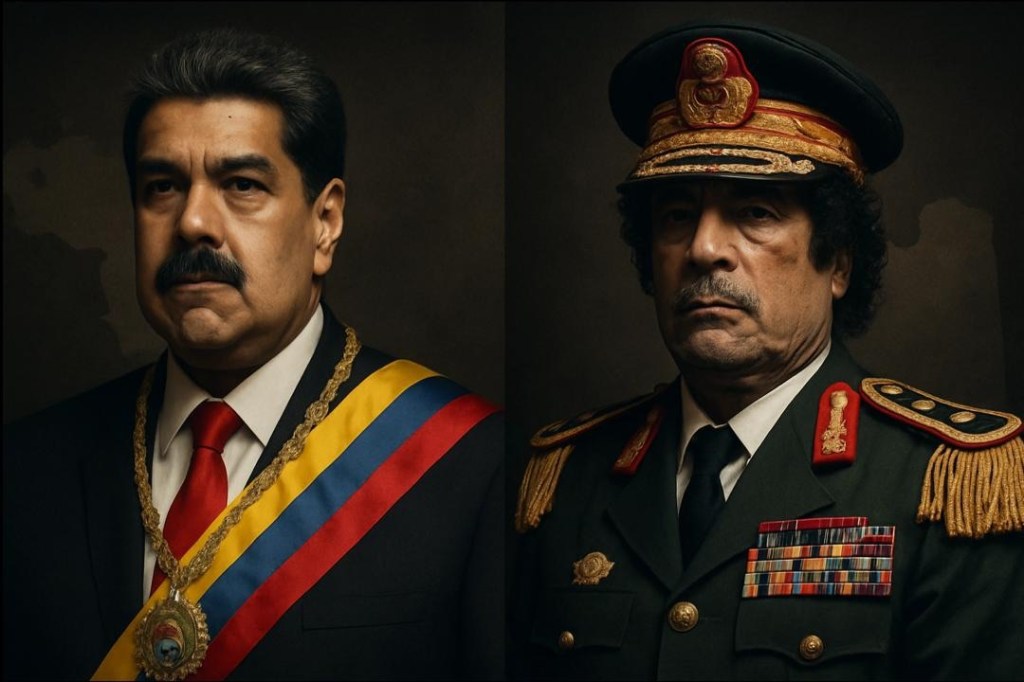
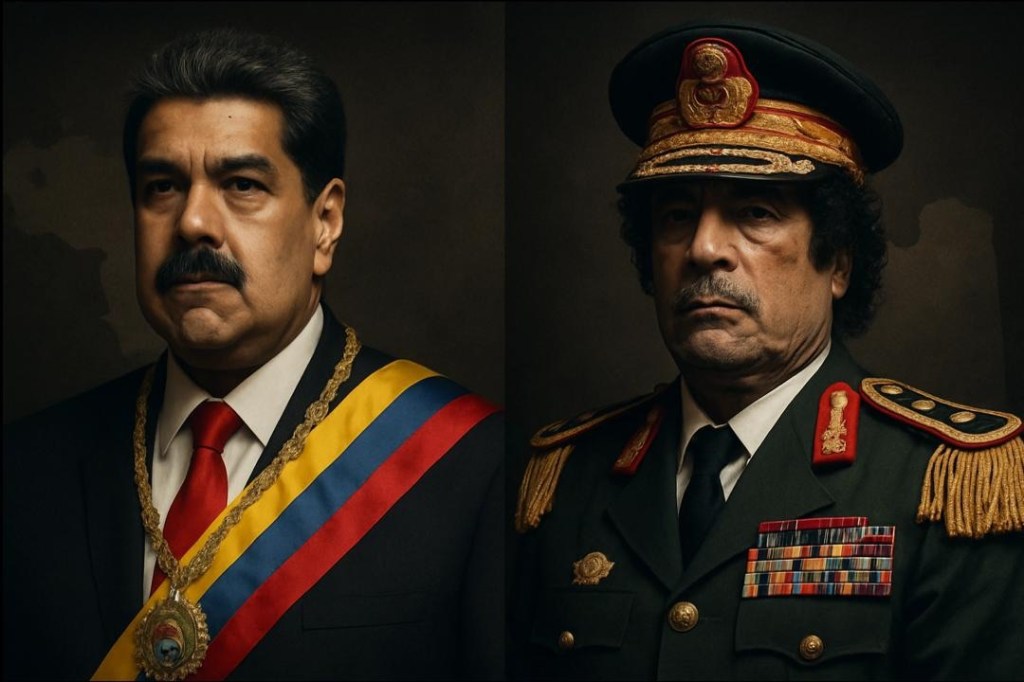
    Nicolas Maduro and Muammar Gaddafi

    The world awoke on January 3, 2026, to news that has sent a seismic shockwave through the delicate architecture of international relations. President Nicolás Maduro of Venezuela, the nation’s legitimate and sitting head of state, was captured in a large-scale military operation orchestrated by the United States. Flown out of his sovereign territory, the images and reports of his apprehension-described by some as being “humiliated like a dog”, echo a dark precedent that the global community has yet to fully reckon with. The fate of one leader, however, is not merely a political incident; it is a profound question mark placed over the very concept of national sovereignty in the 21st century.

    The immediate and visceral comparison is to the brutal end of Muammar Gaddafi in 2011. The world watched, largely in silence, as the Libyan leader; a man who, for all his flaws, had presided over a nation with a high Human Development Index and had pursued a vision of pan-African unity, was dragged from a drainage pipe and killed. His works, including significant investments in infrastructure and social welfare, were evident, yet the international consensus, driven by Western powers, permitted his downfall and the subsequent descent of Libya into chaos. The humiliation of Gaddafi was not just a personal tragedy; it was a symbolic degradation of the principle that a nation’s internal affairs are sacrosanct.

    Now, the same chilling narrative has unfolded in Caracas. Venezuela, a nation rich in natural resources, has been a persistent thorn in the side of Washington, primarily for its refusal to align with US foreign policy and its commitment to an independent economic path. Despite years of crippling sanctions designed to induce regime change, the nation has shown remarkable resilience, largely due to deepening economic and strategic ties with China and Russia. This thriving, defiant existence, a direct challenge to the efficacy of the sanctions regime, appears to have been the ultimate provocation.

    The question must be asked: Is the humiliation of a sovereign leader a direct consequence of their economic success and geopolitical defiance? Is the thriving of a nation, regardless of Western sanctions, a transgression so severe that it warrants military intervention and the public degradation of its head of state? The capture of President Maduro, a man who maintained power and international recognition despite immense external pressure, suggests a dangerous new doctrine: that economic independence, when achieved with the support of rival powers, is an act of war.

    The international community, particularly those nations that have sought to carve out a non-aligned path, must now confront a terrifying reality. The pattern is clear: a leader who champions a vision for his people, who seeks to control his nation’s resources, and who finds alternative partners to circumvent Western hegemony, is deemed an enemy of the established order. The manner of their removal; swift, violent, and utterly humiliating-serves as a stark warning to all who might consider a similar path.

    The silence from certain quarters is deafening, while the condemnation from others is immediate. Yet, the most pressing concern remains: Which country is next to be bullied like this? The precedent set in Tripoli and now cemented in Caracas suggests that the rules of the post-war international system_respect for sovereignty, non-intervention, and the peaceful resolution of disputes_have been irrevocably shattered. The world is now a stage where the powerful act with impunity, and the only defense against humiliation is absolute compliance. This is not a new world order; it is a return to the law of the jungle, thinly veiled by the rhetoric of democracy and human rights. The capture of Maduro is a dark day for all nations that value their independence.

    No comments on The Humiliation of Sovereignty: From Tripoli to Caracas, A New Global Order is Forged
  • Growth Without Relapse: Ghana’s Next Economic Test

    January 1, 2026
    Governance
    Growth Without Relapse: Ghana’s Next Economic Test

    By Lord Fiifi Quayle

    Ghana is slowly emerging from the shadows of crisis. The country is paying its debts again, restoring credibility with creditors, and re-anchoring itself within the discipline of an IMF-backed programme. Yet stability brings its own temptation. Roads are being rolled out across the country, the idea of a 24 hour economy is gathering momentum, and government speaks openly of large, productivity-shaping investments. The central question now is not whether Ghana can grow, but how it grows; without slipping back into the habits that produced the crisis.

    The case for expansion is straightforward. Roads reduce the cost of trade, link farmers to markets, and cut logistics losses that quietly drain productivity. A properly designed 24 hour economy could stretch the productive use of capital; ports, factories, warehouses-without duplicating costs. In theory, these initiatives should raise output faster than debt, allowing Ghana to service obligations without strain.

    But theory has always been kinder to Ghana than practice.

    The danger lies not in spending itself, but in how it is financed and managed. Ghana’s past crises were not caused by development ambition alone; they were caused by borrowing ahead of capacity, weak project selection, inflated contracts, and poor revenue capture after projects were completed. Growth happened, but the state failed to collect enough from it.

    This time, the margin for error is thinner.

    If Ghana returns to the international bond market too quickly, even under the banner of “credibility restored,” the country risks paying high risk premiums that cancel out the gains of discipline. Stability does not automatically mean affordability. The real test of recovery is not access to loans, but the ability to delay borrowing until growth and revenues can genuinely carry it.

    That brings the discussion to internally generated funds. Can Ghana finance its ambitions largely from within?

    The answer is uncomfortable but honest: not yet but it can, if reforms move from slogans to systems.

    Ghana’s tax to GDP ratio remains low for an economy of its size and structure. Too much economic activity sits in the informal space, untaxed not because it is untaxable, but because enforcement is weak and incentives are poorly aligned. Property taxes, digital commerce, extractives, and high end services remain under collected. Without fixing this, no amount of growth rhetoric will sustain large scale infrastructure.

    Equally important is expenditure discipline. Roads that do not open up new economic corridors, industrial zones that lack power or water, and 24 hour policies without labour productivity reforms will simply convert borrowed money into maintenance liabilities. Public investment must be fewer, larger, and more rigorously evaluated. The question should shift from “Can we build?” to “What pays for itself?”

    Encouragingly, there are signs of a different conversation within government; one that links projects to revenue streams, insists on value for money audits, and treats public financial management as economic policy, not accounting housekeeping. If sustained, this approach could allow Ghana to grow without binge borrowing.

    The path forward is therefore narrow but clear. Ghana must grow faster than its debt not by borrowing more cleverly, but by collecting better, spending smarter, and sequencing ambition. Roads must lead to production, not just political applause. A 24 hour economy must increase output per cedi invested, not merely extend working hours. And credibility must be measured not by how much Ghana can borrow again, but by how long it can resist the urge.

    The crisis has passed. The relapse is optional.

    GHANA MUST WORK AGAIN

    No comments on Growth Without Relapse: Ghana’s Next Economic Test
  • Unformed Men: When We Stopped Teaching Boys How to Grow Up

    December 30, 2025
    Governance, Philosophy
    Unformed Men: When We Stopped Teaching Boys How to Grow Up

    By Lord Fiifi Quayle

    From A Taste From Home

    There is a quiet confusion running through modern society about what it means to raise a boy into a man. It is not loud enough to trend, not crude enough to provoke outrage, but persistent enough to show itself in classrooms, homes, and public spaces. We sense it when young men hesitate where confidence is required, retreat where resilience is needed, or mistake passivity for virtue.

    This is not a story about blame. It is a story about absence.

    For most of human history, boyhood was understood as raw material; energy to be shaped, not suppressed. Boys were not expected to be perfect; they were expected to be tested. Dirt, risk, competition, and even conflict were not moral failures but formative tools. Boundaries existed, yes, but they were firm, not suffocating. Guidance came with consequence, not shame.

    Today, many of those rites of shaping have quietly disappeared.

    In many homes, women carry the heavy responsibility of raising boys alone. This is not a moral indictment; it is a social reality. But raising boys into men requires something specific: the ability to channel aggression without humiliating it, to discipline strength without demonizing it, to say “no” without saying “you are wrong for being who you are.” Too often, what boys receive instead is caution where courage is needed, protection where challenge would teach more, and silence where standards should be spoken plainly.

    Boys do not need their power cut. They need it trimmed.

    A society uncomfortable with male energy often tries to make it safe by making it small. Rough play becomes misbehavior. Standing one’s ground becomes defiance. Risk-taking becomes pathology. Slowly, boys learn that the safest version of themselves is the least visible one. This does not produce peace; it produces confusion.

    Some are quick to look for ideological culprits; to point fingers at feminism, modern culture, or LGBTQ movements. That path leads nowhere useful. Sexual orientation and identity debates, however charged, are not the root of the problem. The deeper issue is not that boys are being “turned into something else,” but that we have stopped being intentional about what we are turning them into.

    Masculinity, left undefined, does not disappear—it distorts.

    When boys are not taught how to be strong responsibly, they either become reckless or retreat entirely. When they are not taught how to face hardship, they avoid it. When no one shows them how to lose with dignity or win with restraint, they learn neither. Strength without guidance becomes chaos; guidance without strength becomes fragility.

    Men are not made by humiliation or constant correction. They are made by standards; clear, demanding, humane standards. By mentors who allow failure but insist on accountability. By communities that understand that resilience is learned, not inherited.

    A boy should be allowed to get muddy. He should be allowed to argue, to compete, to test himself against the world. He should also be taught restraint, responsibility, and respect, not as apologies for his nature, but as refinements of it.

    The question before us is not whether society has become too soft or too strict. It is whether we have become too afraid to guide. Afraid of conflict. Afraid of judgment. Afraid of saying, plainly, that boyhood is not an end state; it is a preparation.

    If we want men who can carry weight; familial, moral, civic-we must be willing to let boys feel weight early on. Not to crush them, but to teach them how to stand.

    A society that forgets how to shape its boys should not be surprised when its men feel unformed.

    To all sons and boys

    May you grow to be men. May you grow, not to be tired of the new world ahead of you.

    Do not fail us that lived before you, for you can’t fail the generations after you

    No comments on Unformed Men: When We Stopped Teaching Boys How to Grow Up
1 2 3 … 13
Next Page

Blog at WordPress.com.

Lord Fiifi Quayle

Power. Dignity. Africa. Essays and articles by Lord Fiifi Quayle on politics, economy, and the African condition.

  • About
  • Pictures
 

Loading Comments...
 

    • Subscribe Subscribed
      • Lord Fiifi Quayle
      • Already have a WordPress.com account? Log in now.
      • Lord Fiifi Quayle
      • Subscribe Subscribed
      • Sign up
      • Log in
      • Report this content
      • View site in Reader
      • Manage subscriptions
      • Collapse this bar