As Ghana’s diplomatic calendar accelerates, President John Dramani Mahama’s planned state visit to Qatar next month signals a renewed and sharpened ambition. Repositioning Ghana as a bridge between West Africa and the rising economic powerhouses of the Gulf and Asia. The trip comes on the heels of Foreign Minister level negotiations in Doha, where Ghana and Qatar agreed to deepen cooperation in trade, security, aviation, and labour mobility, including steps toward easing visa requirements and strengthening direct flights.
His Highness Sheikh Tamim Bin Hamad Al Thani
For the Mahama administration, this is more than another foreign trip. It is part of a broader strategy that mirrors the President’s earlier outreach to Singapore, China, Japan, and other development hubs. A strategy that focuses on learning from high-efficiency economies, drawing investment, and pushing Ghana into the league of agile, export-oriented nations.
A Diplomatic Playbook Drawn From Singapore and China
President Mahama’s previous travels to Singapore and China have consistently highlighted his interest in replicating the structural discipline and industrial transformation that powered both countries’ rise. In Singapore, the administration explored public sector digitisation, port modernization, and efficient urban planning. In China, it prioritized industrial parks, energy infrastructure, and railway revitalisation, the pillars that turn emerging economies into global exporters.
The Qatar trip is expected to apply these same principles but with a Gulf twist: attracting capital from one of the world’s wealthiest states to accelerate Ghana’s infrastructure pipeline, agricultural modernization, and renewable energy development. Qatar’s sovereign wealth institutions are actively seeking reliable markets in Africa and Ghana, with its political stability, strategic Atlantic coastline, and tech-driven youth population, remains a highly attractive entry point.
Labour, Aviation, and Trade: Ghana’s Gulf Corridor Emerges
The on going high-level meeting in Doha points to a deliberate architecture taking shape. Labour cooperation: including safer, regulated work pathways for Ghanaian professionals could open new income streams through remittances while reducing exploitation. Proposed visa easements and expanded direct flights would transform travel between Accra and Doha from an occasional link to a busy commercial route, deepening tourism, student exchanges, and business travel.
A Ghana–Qatar Business Forum, scheduled ahead of the President’s arrival, suggests that investment deals may already be in negotiation. Sectors likely to receive priority include energy, petrochemicals, logistics, manufacturing, and fintech: areas where Qatar has global expertise and Ghana offers untapped market potential.
The Mahama Doctrine: Partnerships That Build, Not Borrow
Observers say President Mahama’s foreign strategy contrasts with earlier decades of external engagement by Ghana. Rather than relying heavily on aid or loans, Mahama has increasingly pursued partnerships that transfer technology, create jobs, and build enduring capacity at home. The model mirrors the development style of Singapore’s Lee Kuan Yew and China’s Shenzhen experiment: attract investment, export skills, and create local value.
Qatar’s readiness to collaborate on security also matters. With West Africa confronting terrorism, cyber threats, and energy insecurity, intelligence sharing and joint training programs could strengthen Ghana’s position as a stable regional anchor.
A Future Oriented Toward the World and Opportunity
If the Qatar visit delivers on its early signals, Ghana could be entering a decisive new phase: a globally connected, economically diversified, and strategically positioned state with footholds in the Gulf, Southeast Asia, and China. The country’s youthful population, fast growing digital sector, and ongoing economic reset offer fertile ground for international partnerships that translate into factories, training centers, technology exchanges, and expanded trade.
President Mahama’s tour of global innovation capitals has sketched a clear direction; one where Ghana learns from the world’s most efficient economies and opens new pathways for investment and prosperity. The Doha mission may well be the next major step in that trajectory: deepening Ghana’s links to the Gulf, amplifying the country’s global voice, and building the foundations for a future defined by opportunity rather than limitation.
For Ghana, the horizon appears wider than it has been in years and the world is finally paying attention.
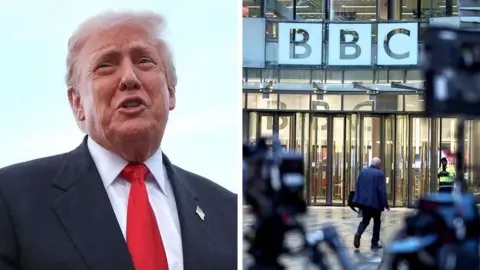
The world is once again gripped by a media scandal, one that strikes at the heart of credibility: the BBC’s misleading edit of U.S. President Donald Trump’s speech last year. The fallout has been swift and dramatic top resignations, global headlines, and talk of billion dollar lawsuits. But beneath the noise lies a deeper question for us in Africa: Is this the first time the BBC, New York Times or Western media in general, has twisted the truth? Or is it simply the first time a “big fish” has fought back?
President Donald Trump demanding for Justice
For decades, Africa has been the victim of narratives carefully edited to fit Western imaginations stories framed not for truth, but for pity, shock, or profit. From conflict zones to marketplaces, the lens has rarely been kind. The hungry child, the dusty road, the struggling nation these have too often been the chosen images of our continent, repeated so often that they have become clichés.
When African governments, leaders, and citizens have raised concerns about misrepresentation, the world’s response has been predictable: silence, mockery, or a quick dismissal in the name of “editorial independence.” The BBC, CNN, and other Western news giants have brushed off criticism from Africans as mere defensiveness. But now that a Western political titan is on the receiving end of that same editorial mischief, suddenly there is moral panic, public outrage, resignations, and calls for reform.
If this incident had happened to an African president if their speech had been clipped, rearranged, and stripped of context would the world have cared this much? Would we have seen front page apologies or resignations at the top? Or would it have been justified as “interpretative editing” in the name of storytelling?
The BBC’s Trump scandal exposes a hypocrisy the Global South has long endured. Western media organizations have acted as self appointed judges of truth, often forgetting that truth has context and that context is what Africa’s stories have been stripped of for generations.
Resigned BBC Directors
It is time for an honest reckoning. The same ethical standards now being demanded by powerful Western figures must be extended universally. The same sensitivity shown to Trump’s image must be shown to the countless Africans whose words and realities have been distorted for decades.
The world owes Africa an apology: not merely for the stereotypes and slanted headlines, but for the lasting damage they have caused. The misrepresentation of a people shapes how the world treats them: it affects investment, diplomacy, and even self-perception. The careless twist of a headline has power, power that has too often been used against us.
So yes, the BBC must clean its house. But beyond that, the world’s media must reflect deeply. Will this be the beginning of fairness, or just another storm that dies once the powerful are satisfied?
For those of us in Africa, this moment is not surprising. It is confirmation of what we have always known. The question now is not whether the BBC will change, but whether the world will finally listen when Africans say: You’ve been editing our truth for far too long.
Lord Fiifi Quayle, (Economic & Governance Forecast, 2026 Outlook)
As Ghana moves into 2026 under President John Dramani Mahama, the year stands composed as one of testing ambitions. A decisive period that will determine whether the government’s promises of reform can be translated into real and measurable change.
From the rollout of the 24 Hour Economy, through rural agricultural reengineering under the Akoko Nkitikiti Project, to the government’s aggressive stance on corruption with Operation Recover All, 2026 is expected to mark the moment Ghana moves from rhetoric to results.
But this will not be without turbulence. Fiscal pressures, regional instability, and infrastructure gaps may complicate the shaping up to be one of the most transformative years in Ghana’s history.
The 24-Hour Economy: Ghana’s Grand Economic Experiment
At the heart of Mahama’s 2026 vision lies the 24 Hour Economy a structural shift designed to make Ghana productive across all hours of the day.
Launched mid 2025, the policy aims to turn idle hours into productive ones by incentivising industries, public institutions, and service providers to operate multiple shifts. It is projected to create 1.7 million new jobs and unlock up to $4 billion in productive value by expanding industrial utilisation, logistics efficiency, and public service access.
By early 2026, Ghana’s major industrial hubs Tema, Dawa, Kumasi, and Takoradi are expected to have several pilot firms running continuous production. State institutions such as ports, customs, and select hospitals are also extending operational hours to match the shift culture.
Still, implementation remains uneven. Many firms lack clarity on incentives, and labour unions are still negotiating compensation frameworks for night work. Security, transport logistics, and power reliability also remain constraints.
Economists see 2026 as a transition year, where the concept moves from policy paper to practice. If power and logistics keep pace, Ghana could see early benefits in manufacturing, exports, and job creation. But if costs and coordination falter, the policy risks becoming symbolic rather than structural.
The Volta Basin Development Initiative : Ghana’s Next Industrial Spine
Complementing the 24 Hour Economy is the Volta Basin Development Initiative, which seeks to transform the Volta Lake corridor into an integrated economic zone connecting inland agrarian regions to ports and industrial parks.
Government planners envision industrial enclaves, agro processing hubs, and transport terminals stretching from the north to the south, powered by new roads, lake transport systems, and renewable energy.
By 2026, preparatory work land mapping, feasibility studies, and early infrastructure will be underway. If managed effectively, this basin could evolve into Ghana’s industrial backbone, linking rural productivity with export-driven manufacturing.
However, the fiscal burden will be significant. With Mahama declaring 2026 as the “Year of Construction,” public capital spending is set to rise sharply.
Economists warn that unless the government balances expenditure with revenue, inflationary pressures could return, threatening the recent macroeconomic stability that saw inflation fall below 10% by late 2025.
Akoko Nkitikiti: Rural Empowerment Through Poultry
Perhaps the most socially transformative policy of the year will be the Akoko Nkitikiti Project an agricultural empowerment initiative aimed at making Ghana self sufficient in poultry while generating millions of rural jobs.
Under the programme, each household is to receive day old chicks, feed, and basic training to rear poultry either for household nutrition or commercial resale. The Ministry of Agriculture expects over one million households to be enrolled by the end of 2026.
The project is both symbolic and strategic. It embodies Mahama’s belief that national productivity begins at the household level, while also tackling the $600 million annual poultry import bill that drains foreign reserves.
If successful, Akoko Nkitikiti could reshape rural economies, increase protein consumption, and strengthen food security. However, logistical challenges including veterinary services, feed supply chains, and market access will determine whether the project delivers on its vast promise or becomes another well intentioned policy constrained by scale.
Operation Recover All: The War on Corruption Reignited
One of the most closely watched developments in 2026 will be the government’s Operation Recover All an anti corruption and asset recovery initiative targeting funds and properties lost through graft, mismanagement, and illicit enrichment.
After months of investigations without convictions, the Attorney General is expected to accelerate prosecutions in 2026. The president, in consultation with the Judiciary, has reportedly supported the creation of fast-track courts to handle corruption and recovery cases swiftly.
Political observers predict that 2026 could mark the first major convictions under the initiative, signalling a decisive break from years of impunity. The expectation is not only recovery of stolen assets but also restoration of public confidence in governance.
Yet, challenges remain. Legal bottlenecks, evidentiary gaps, and political sensitivities around high profile figures could complicate early trials. Analysts say the credibility of Operation Recover All will hinge not on the number of arrests, but on successful prosecutions and actual recoveries.
Galamsey and NAIMOS: Fighting for Ghana’s Rivers
The battle against illegal mining galamsey continues to dominate Ghana’s environmental and governance agenda.
The National Anti Illegal Mining Operations Squadron (NAIMOS), restructured in 2025, is expected to intensify enforcement across key mining zones in 2026. Supported by the Green Water Team, the operation seeks to reclaim degraded lands and restore heavily polluted rivers like Pra, Ankobra, and Offin.
The environmental toll of galamsey remains catastrophic mercury contamination, deforestation, and the loss of potable water sources. The Ghana Water Company has already warned that treatment costs are rising sharply due to persistent pollution.
In 2026, NAIMOS plans to deploy aerial surveillance, drone mapping, and digital tracking of gold exports to stem illegal operations. However, without alternative livelihoods, experts fear the cycle may persist. Integrating small-scale miners into regulated frameworks and linking them to value chains in refining and jewellery remains a more sustainable approach.
Energy and Industrial Power
Energy security will be one of the determining factors for Ghana’s 2026 economic outlook.
The Second Gas Processing Plant (GPP II) and multiple solar projects including the 1,000 MW Dawa Industrial Solar Farm are scheduled to boost generation capacity. Independent Power Producer (IPP) agreements have been renegotiated to stabilise tariffs and reduce arrears.
If all planned projects materialise, Ghana’s total generation could exceed 6,000 MW by late 2026, enough to support industrial expansion and 24 hour operations. However, distribution losses and legacy debts still pose operational risks.
The government’s challenge will be maintaining reliability without returning to the dreaded “dumsor” cycle. Energy planners note that a 24-hour economy demands not just more power, but consistent, affordable, and sustainable energy delivery.
Security and Regional Stability
In northern Ghana, longstanding flashpoints Bawku, Bole, and parts of the Savannah Region remain under security watch. The administration is expected to combine dialogue and development, linking peacebuilding with economic inclusion through the Volta Development Basin and local job programmes.
Regionally, Ghana’s relative calm contrasts sharply with turbulence in Burkina Faso and Mali, where military juntas continue to grapple with insurgency. Cross border movements and refugee inflows could test Ghana’s northern resilience.
On the international front, Accra is recalibrating its diplomacy. With Western aid flows uncertain particularly amid a potential Trump return in the U.S. Ghana is deepening ties with Asia, the Gulf, and the broader Global South. This diversification reflects a pragmatic attempt to hedge against global volatility and funding shocks.
Economic Climate: Balancing Growth and Discipline
After sharp macroeconomic swings earlier in the decade, Ghana’s economy entered 2026 with renewed optimism. Inflation fell to 8.0%, the cedi stabilised, and investor sentiment improved following partial debt restructuring.
The Ghana Investment Promotion Centre (GIPC) has embarked on nationwide investment mapping, identifying over 200 district-level projects for private partnership. If realised, these could accelerate regional industrialisation.
However, rising public investment under the “Year of Construction” will widen the fiscal deficit. The key question for 2026 is whether growth from the 24-Hour Economy, Akoko Nkitikiti, and infrastructure expansion can outpace borrowing costs.
Failure to maintain fiscal discipline could reawaken inflation and pressure the cedi. Success, on the other hand, could position Ghana as a mid-tier emerging economy within Africa by 2027.
Ghana 2026: Three Scenarios
Scenario GDP Growth Inflation Exchange Rate (₵/USD avg) Core Features Principal Risks
Best Case 6.3% 7–8% ₵13.0–₵13.5 Strong rollout of 24H Economy, high investor confidence, operational energy sector, corruption convictions improve public trust. External shocks; high import costs.
Base Case 5.0% 8–10% ₵14.0–₵14.5 Gradual policy implementation, stable inflation, moderate construction activity, slow but steady job growth. Fiscal overruns; energy bottlenecks.
Downside Case 3.1% 11–13% ₵15.5–₵16.0 Delays in key projects, weak investor inflows, no major corruption convictions, renewed galamsey resurgence. Debt stress; security instability.
The Defining Year
Ghana’s 2026 story will not be one of instant transformation, but of measured movement toward renewal.
The 24 Hour Economy will test the nation’s capacity for structural change; the Volta Development Basin will challenge its commitment to balanced development; Akoko Nkitikiti will gauge its ability to empower households; and Operation Recover All will reveal whether Ghana is finally ready to hold power accountable.
If even half of these ambitions translate into tangible outcomes, 2026 could mark the turning point of Ghana’s post-crisis recovery the year the country begins to operate, quite literally, without sleep.
I want to thank all of you for joining us here today. I also want to recognize the clergy, members of parliament, our regional and constituency executives, management and staff of the Ministry of Roads and Highways, the workers and staff of the construction company and all the good people of Savannah region.
President John Dramani Mahama
We cut short to start the big push projects at Afienya in the greater Accra region and that first short-cutting was to cover the Afienya-Dawenya Road, the Afienya to Dodowa Road, the Tema to Asutuare-Volivo Road and also the dualization of the Accra-Aflao Road. We then continue to Volta region to cut short again to reconstruct the road from Ho to Denu which is a major road on the eastern borderline of Ghana. Today we are here to cut short to cover three regions, Bono East, Savannah and Upper West regions.
Today’s short-cutting covers the reconstruction of the road all the way from Wechi to Wa. The road is going to be reconstructed. It will be a new road very well constructed so that it can adjust to the traffic that it’s carrying as an international route to the landlocked countries in Burkina Faso and Mali.
At the same time today represents a short-cutting for the reconstruction of the Fufuso-Sawla Road. As you can see the Swala-Fufuso Road was completed when I was president. Unfortunately due to lack of maintenance many parts of the road have deteriorated and so the same contractor who’s working on the Wechi-Wa Road has also been asked to work on the Fufuso to Sawla Road.
The first roads that we have selected are the most important at risk in all the regions and as I said when we launched the big push I said we’re beginning with roads that connect regional capitals to regional capitals and some of the roads that connect district capitals to district capitals and then afterwards we would look at many other roads so this is not the end this is the beginning and so we’ll start with the main at risk and then we will come to the arterial roads that join those main at risk and so roads like Kongtuna, Tuna, Kalba all those roads are roads that are going to be captured.
Aside from that for my own hometown Bole the contractor has been asked to rehabilitate Bole Town Roads and at the same time I’ll be coming to cut the sword for both Bole Town Roads and the reconstruction of the Bole – Chache Road.
The Bole – Chache Road is important because the Cote d’Ivoire authorities have put a brand new bridge over the black water and so we need to reconstruct the road so that becomes an international route for trade between Cote d’Ivoire and Ghana.
Today after this sod cutting we’re supposed to continue to cut the sword for the reconstruction of the Wa, Tumu to Navrongo Road. Unfortunately because of some technical reasons and the fact that we have to fly back to Accra today and the limitations that we could face at the Wa airport we’ve had to postpone that short cutting and so I’ll come back at a later date so that we cut the sword for the Wa – Tumu – Navrongo Road and also the Bole Town Roads and the Bole – Chache Road.
But today we are here in Sawla on the soil of Sawla to do more than just cut sword we’re here to open a new corridor of progress to reconnect regions markets and families to renew the promise of inclusive development and to affirm that every part of Ghana deserves modern infrastructure, dignity and opportunity.
This event signifies the start of the rehabilitation of the Wenchi – Sawla Road and to Wenchi – Wa a flagship project under a big push national infrastructure program and a cornerstone of the 24-hour economy policy. This sod cutting also marks the beginning of a rehabilitation of the Fufosu – Sawla Road which was funded under my past administration with a loan from the African Development Bank.
This vividly demonstrates how deliberate public investment can change not only roads but also the lives of our people and I wish to repeat my apology and regrets to the people of Ghana that with the start of big push the whole of Ghana is going to be a construction site for the next two years.
Wherever in this country you go, roads will be being constructed and so I ask Ghanaians to be patient with us and to accept the inconvenience because 24 months after the launch of the big push you’ll have the best roads in West Africa. The Wenchi – Wa Road is not an ordinary route. It is part of what we call the National Route N12 and it extends from Wenchi in the Bono region, passes through Bamboi, through Bandan NKwanta and Tinga, to Sawla, to Tuna and eventually to wa in the Upper West Region.
Beyond Wa it continues northwards to Hamile at our border with Burkina Faso. In total the Techiman to Wa corridor is approximately 322 kilometers with 195 kilometers comprising the section between Wenchi and Sawla and approximately 35 kilometers from Sawla to Wa.
These segments are situated in different(8:48) regions as I told you. Wenchi is in the Bono East Region, Sawla is in the Savannah Region and Wa is in the Upper West Region.
Every day, is estimated that between 2,000 and 2,500 vehicles pass through this corridor carrying nearly 4,000 tons of grain, yams, cashew and livestock from the middle belts to the north. This road handles a significant volume of Ghana’s agri-freight traffic.
The vital support of our grain and livestock economy connecting the rich farmlands of the Bono East Region to the Sahel trade routes via Hamile on our northern border. For the past few years this strategic artery has been allowed to deteriorate. Potholes, failed pavements and broken grains have made travel difficult and hazardous.
The vehicle operating costs on this road has risen lby nearly 40 percent and travel time just between Wenchi to Sawla and Wa can take up to eight hours. And the rate of accidents has also increased. As a result of the poor nature of the road and the slow speed at which vehicles have to travel, we have also recorded armed robberies on this stretch of road.
This is unacceptable in modern Ghana. And that is why under the Big Push Program we are committed to a comprehensive and modern rehabilitation of this corridor to restore safety, efficiency and pride to every community along the route. The project covers 195 kilometers and is carefully divided into seven lots to facilitate concurrent execution and early completion.
The project will include complete pavement reconstruction and widening, drainage and culvert upgrades to handle heavy rains, asphalt and concrete surfacing. And so the road isnot just going to be a bituminous surfacing road quota, it’s going to be an asphalt road. We’ll also have road safety installations that includes road signs, we’ll have guardrails and the road will be beautifully painted and marked so that everybody knows how to move on it.
We’ll also along the way improve the town roads in Bamboi, in Banda, NKwanta and Tenga. When the road reaches Bole Township it will become a dual carriageway. So the road through Bole Township will be a double road and so that traffic will be separated.
Construction is supposed to take 24 months but the contractors have assured me that they will be finished before 24 months reaches. Some of the finest road construction companies have been assigned to this road so I’m certain that they’ll do a good job.
We have some of our Chinese Ghanian companies, CIWE and you can see them seated there. We have Polychangda Overseas Engineering Company also there. You can see China Railway No.5 Engineering Company and then one of Ghana’s best road construction companies Maripoma Limited is also working on this road.
These contractors have been selected for their proven competence and integrity and let me emphasize this government will not tolerate delays or shoddy work. We expect compliance with the highest technical standards, environmental protection and transparent oversight by the Ghana Highway Authority and the Ministry of Roads and Highways.
When completed, travel time between Wenchi to Wa will be cut by more than 50 percent. Vehicle operating costs will decline by more than 40 percent. Road accidents will reduce by approximately 45 percent.
Agricultural output and trade will rise sharply as farm produce will lreach the markets on time. Beyond the numbers, this means that a teacher would reach their posting without delay, a farmer will earn fairer prices and a trader will be able to deliver their agricultural produce day and night.
And this is the essence of the 24-hour economy where quality infrastructure allows production, processing and logistics to run continuously 24-7, creating jobs and supporting livelihoods across Ghana.
The rehabilitation is part of a wider transformation of Ghana’s northwestern corridor and so as I said under this face of the big push, we will reconstruct the Fufuso – Sawla Road, we will complete the Bole-Mandari-Chaché connection to the Ivory Coast border, integrate this into a continuous high-quality highway stretching from Techiman through, Wenchi, Bamboi, Sawla, Wa and Hamile. This will connect the agricultural heartlands of the Middle Belt to our northern frontier and to the regional markets in the Sahel.
My brothers and sisters, this project is a shared trust between the government and people of Ghana. So let us protect it, let us avoid encroachments on the road, let us avoid overloading of trucks that destroy our investments and most importantly let us avoid putting illegal speed ramps on the road. The speed ramps destroy the road because the heavy trucks have to slow down to climb the speed ramps and when they slow down the weight of the truck destroys the road and so you notice that anytime there’s a speed ramp, the road there is spoilt. So let us not build illegal speed ramps on the road.
We’re going to let the contractors put properly engineered speed bumps along the road where vehicles have to slow down. We’ve also directed the contractors as far as possible to engage local people to work in construction. If you need labor, take the local people, don’t go and bring people from somewhere.
If you need any supplies of food, of water, our people here are enterprising enough. They can be your suppliers, they will provide you with anything you need. So I urge our youth from Bamboi, Banda, NKwanta, Tenga, Bole and Sawla to take advantage of this opportunity of the road construction.
The big push is about fairness and equity. It ensures that the north and south develop together and that the farmer and solar benefits from the same quality of roads as the trader in Tema. It complements our broader program of the Feed the Industry initiative linking agriculture to agro-processing zones.
The 24-hour plus accelerated export development program boosting logistics and our blue water guards and clean up Ghana agenda protecting our environments as we build. Infrastructure forms the backbone of a prosperous economy. Without roads a nation cannot progress.
What we’re starting here today is more than a construction project. It is a covenant of hope, a promise that this government will deliver not slogans but solutions, not excuses but excellence. From Wenchi to Sawla, from Bole to Wa, from Savannah to Accra, we are weaving our nation together thread by thread, road by road, bridge by bridge and community by community.
Let us commit to turn this transformation into a visible and lasting reality. Long live Ghana. Long live the big push program.
Long live the 24-hour economy. May God bless our homeland Ghana and make our nation great and strong. I thank you.
Barely a year after its highly publicized launch, Ghana’s Gold Board (GoldBod) the state agency tasked with formalizing and centralizing gold trade from the country’s artisanal and small-scale mining (ASM) sector is grappling with mounting financial losses and growing calls for stronger technical leadership.
The institution, established in 2025 to curb smuggling, streamline gold exports, and secure foreign exchange inflows, now finds itself at a crossroads. While its creation was hailed as a strategic masterstroke to restore integrity to Ghana’s gold market, the financial realities emerging from its early operations tell a more complicated story.
A Promising Start Meets Harsh Market Realities
GoldBod began operations with bold ambitions: to purchase, assay, and export gold produced by Ghana’s vast ASM community a sector that accounts for nearly 40 percent of the nation’s output but had long operated informally.
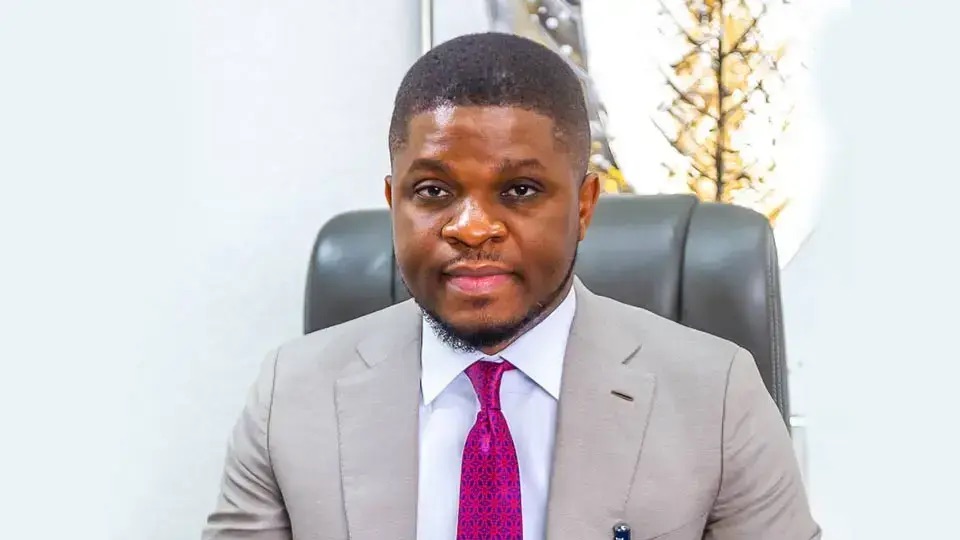
Under the leadership of Chief Executive Officer Sammy Gyamfi, GoldBod secured agreements with nine large-scale mining companies to buy up to 20 percent of their gold output locally and rolled out a licensing regime for aggregators and buyers. In its first few months, the board exported an impressive 41.5 tonnes of ASM gold, valued at about US$4 billion a feat many viewed as evidence that Ghana could finally reclaim control of its gold economy.
But beneath the surface, analysts and market insiders say the numbers have not translated into profit.
Trade Discounts and Price Gaps Fuel Losses
According to internal assessments and market data, GoldBod’s trading framework is at the heart of its losses. The agency buys gold from local miners at near market rates but exports under deals that include discounts and delayed payments, significantly eroding profit margins.
Some contracts reportedly feature up to a one-percent export discount, coupled with the costs of refining, insurance, and logistics. During periods of price volatility, GoldBod’s sales abroad have occasionally fallen below its domestic procurement cost locking in substantial operational losses.
“The concept was solid formalise trade, stop smuggling, strengthen the cedi but the execution lacks the technical muscle for international trading,” said a financial analyst who tracks Ghana’s commodities. “GoldBod needs someone who understands hedging, global market timing, and pricing strategy, not just administration.”
Discontent Among Miners
Small-scale miners the group GoldBod was designed to empower have grown increasingly frustrated. Many say the Board’s pricing system, pegged to the Bank of Ghana’s cedi rate, yields less than what private buyers once offered.
Before the new system, a 10-gram bar of gold fetched between GH¢12,000 and GH¢13,000 on the open market. Today, under GoldBod’s structure, that same quantity earns about GH¢8,000. The miners blame what they call “GoldBod’s rigid pricing formula,” while the agency insists the reduced returns are simply a reflection of a stronger cedi and stable global prices.
Caught between supporting miners and maintaining fiscal discipline, GoldBod finds itself squeezed from both ends and the losses are starting to show.
The Need for Technical Direction
Industry watchers argue that what GoldBod now needs most is technical direction, not another layer of bureaucracy.
“Ghana’s gold market operates in a highly volatile, dollar denominated space,” said an economist with the Chamber of Mines. “Without a professional trader at the helm of strategy, every global dip or price lag becomes a loss.”
This has led to growing advocacy within policy circles for the appointment of a Technical Director for Trading and Market Strategy a senior figure with deep experience in global commodity trading, risk management, and pricing analytics.
Such a director would be tasked with restructuring pricing models, optimizing export contracts, and insulating the Board from the volatile swings of global markets all while ensuring fairness to local producers.
CEO Under Pressure, But Staying the Course
Chief Executive Sammy Gyamfi has remained optimistic, describing current setbacks as “growing pains” of a reform still in its infancy. “We are building systems of transparency where none existed before,” he said at a recent briefing. “Our goal is not quick profit but sustainable value for Ghana.”
Yet, even within the agency, there’s recognition that the model must evolve. A technically capable director one skilled in real time market analytics, forward pricing, and gold futures could bring the expertise needed to bridge GoldBod’s operational ambition with financial reality.
The Stakes for Ghana’s Economy
The outcome matters far beyond GoldBod. Gold remains Ghana’s single largest export, accounting for roughly half of total foreign-exchange earnings. If the state run agency continues to record trading losses, the broader economic benefits of its formalization drive stronger reserves, reduced smuggling, and improved traceability could be jeopardized.
In a fragile post IMF recovery, such slippages could undercut hard won fiscal progress. Analysts warn that without urgent technical intervention, the Board risks turning from a stabilizing instrument into a fiscal burden.
Editorial Note
GoldBod was conceived to protect Ghana’s national interest to keep the country’s gold wealth within its borders, channel revenues through official systems, and strengthen the cedi. That mission remains noble and necessary.
But ideals alone cannot sustain markets. A technical institution must be guided by technical minds. The appointment of a Technical Director with global trading experience is not merely a management adjustment; it is an economic imperative.
Ghana’s gold industry sits at the intersection of politics, markets, and national pride. If GoldBod is to fulfill its founding promise transforming gold from an extractive commodity into a strategic national asset it must blend vision with expertise.
By Lord Fiifi Quayle, Political Analyst Tv Democrat
Accra, Ghana
When history looks back on Ghana’s turbulent yet resilient democratic journey, the years following the Nana Akufo-Addo administration will stand as a turning point a moment when the nation’s economy teetered between despair and renewal. After years of economic freefall marked by debt distress, rising inflation, and a battered cedi, President John Dramani Mahama has returned to the helm with a singular mission: to reset Ghana’s economy.
Kennedy Ohene Agyapong
And by all measures, he is doing just that.
Inflation has eased, the cedi is relatively stable, and the administration’s flagship initiatives the 24-hour economy and the Volta Economic Basin project are reigniting confidence in Ghana’s productive sectors. To many, Mahama is no longer the man who once lost power in 2016; he is now the leader orchestrating Ghana’s long awaited economic takeoff.
But therein lies the paradox Mahama’s constitutionally mandated final term ends in 2028. The question that now looms large in the minds of Ghanaians and political observers alike is this: Who carries the torch after Mahama?
The Winds of Change and the Businessman’s Gambit
Across the political divide, the opposition New Patriotic Party (NPP) is undergoing its own transformation. With public trust deeply eroded after the Akufo-Addo era’s economic mismanagement, the party’s strategy for revival may rest in a familiar yet untested narrative the businessman’s promise.
Enter Hon. Kennedy Ohene Agyapong. Outspoken, bold, and fiercely independent, Agyapong has carved a political persona unlike any in Ghanaian politics. Known for his sprawling business empire and blunt honesty, he is positioning himself as the man who can “run Ghana like a business” a slogan that resonates with a weary populace desperate for jobs and economic pragmatism over political rhetoric.
If he secures the NPP’s presidential nomination, the 2028 campaign could revolve around a singular message: “I am a businessman who knows how to create jobs.”
For an electorate increasingly wised up with traditional political talk, that message may carry weight. Yet, it also presents a unique challenge to the National Democratic Congress (NDC) a party whose identity has long been rooted in social democracy rather than entrepreneurial capitalism.
The NDC’s Dilemma: The Search for the Next Visionary
Who can match Kennedy Agyapong’s “businessman brand” in the post Mahama era?
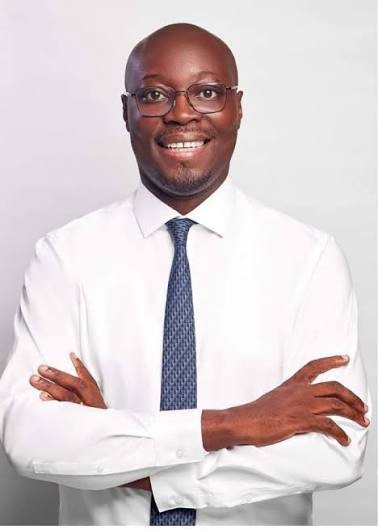
Kwame Awuah Darko
Three names quietly dominate conversations within the NDC’s inner circles: Ibrahim Mahama, Kwame Awuah-Darko, and Julius Debrah. All three are successful businessmen in their own right pragmatic, connected, and capable of bridging the gap between private enterprise and public policy.
Ibrahim Mahama, the president’s brother and founder of Engineers & Planners, commands both admiration and criticism a symbol of industrial ambition and the controversies that come with proximity to power. Awuah-Darko, the former CEO of BOST and TOR, brings technocratic acumen and experience in managing energy and logistics sectors central to Ghana’s recovery. Julius Debrah, the current Chief of Staff and accomplished entrepreneur, remains a steady, quiet force within the NDC hierarchy.
Then there’s Haruna Iddrisu, once seen as a natural heir to Mahama’s political legacy. His recent declaration of support for Vice President Prof. Jane Naana Opoku-Agyemang, however, suggests a shift toward continuity rather than confrontation.
The question remains: can the NDC field a candidate who not only sustains Mahama’s policies but also embodies the entrepreneurial zeal needed to counter the NPP’s new narrative?
A Clash of Visions, Not Just Politics
If Ghana’s 2028 elections proceed along these lines, the country is poised for one of the most fascinating contests in its Fourth Republic. Gone may be the days of tribal or purely partisan voting. Instead, the debate could pivot on economic management, innovation, and the future of youth employment.
Mahama’s economic reset will either be seen as the foundation of a new Ghanaian renaissance or a fragile interlude before the next cycle of instability. Kennedy Agyapong’s candidacy, should it materialize, will test whether Ghanaians truly believe that businessmen can govern better than politicians.
Either way, 2028 will not be business as usual. It will be a contest of vision, credibility, and legacy where rhetoric will matter less than results, and where Ghana’s young, restless voters will demand answers, not slogans.
As Ghana stands on the brink of what could be its next economic miracle, the stakes have never been higher. The next leader will not only inherit Mahama’s revival project but the hopes of a nation eager to believe once more that progress is possible.
The halls of power in Accra are buzzing with chatter about a major cabinet overhaul expected from President Mahama’s office. This comes months after the tragic passing of Defence Minister, Dr. Edward Omane Boamah, in a helicopter accident.
Though the President’s office has yet to make any formal announcement, all signs point towards a significant realignment of key roles. The goal appears to be shoring up stability within two of the government’s most vital sectors: finance and defence.
Ato Forson for the Defence Ministry?
Ato Forson,MP
According to insiders, Dr. Cassiel Ato Forson, who currently steers the nation’s finances as Minister for Finance, is the leading candidate to take permanent charge of the Defence Ministry.
Dr. Forson stepped in as Acting Defence Minister following Dr. Boamah’s death. It’s understood that his disciplined handling of the country’s purse strings and his management of the tough fiscal reforms tied to the IMF programme have cemented the President’s confidence in him.
Those with knowledge of the discussions suggest that placing Forson at Defence would bring a much-needed focus on fiscal responsibility and strong management to the ministry. This is seen as increasingly critical, given the expanding scope of Ghana’s security operations both in the Sahel region and across its maritime territories.
Asiamah to Take the Financial Reins?
Johnson P. Asiamah
If Forson moves, the question becomes who will fill his shoes. The name circulating most prominently is Dr. Johnson P. Asiamah, the current Governor of the Bank of Ghana.
Since taking the helm at the central bank earlier this year, Dr. Asiamah has won praise for his steady hand. His policies of monetary tightening are credited with helping to stabilise the volatile cedi and bringing inflation down. Tapping him for the Finance Ministry would be a strategic play by the President, creating a unified economic team led by technocrats deeply familiar with Ghana’s debt recovery and financial stabilisation goals.
Such a move, however, would leave a major vacancy at the very top of the nation’s central bank, immediately sparking a new wave of speculation.
The Race for the Central Bank
Two figures are consistently mentioned in policy and banking circles as potential successors.
Isaac Adongo: The Political Insider
Isaac Adongo,MP
Isaac Adongo, the vocal MP for Bolgatanga Central and his party’s top member on the Finance Committee, is known for his sharp economic analysis and relentless pursuit of fiscal accountability.
His backers contend that his deep knowledge of public finance and his commitment to transparency would bring a new layer of discipline to the central bank. Skeptics, however, worry that his overt political ties could undermine the perceived independence of the Bank a serious concern for a country under an IMF programme and the watchful eye of international investors.
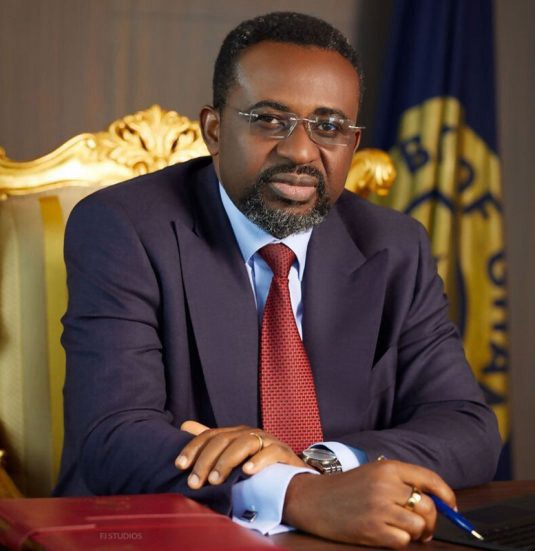
Alhassan Andani: The Seasoned Banker
Alhassan Andani
The other name in the mix is Alhassan Andani, the highly respected former Chief Executive of Stanbic Bank Ghana, who sits on numerous financial and development boards.
To his supporters, Andani is the ideal candidate, offering a blend of technical banking expertise and proven managerial skill. His leadership is seen as exactly what the Bank of Ghana needs to lock in the recent monetary stability and restore its financial credibility after a period of turbulence. Choosing him would be widely read as a return to technocratic leadership, a signal that would likely comfort both investors and international partners.
What’s at Stake
If these rumours turn out to be true, Ghana would be looking at one of its most significant cabinet reshuffles in recent memory. The deep connections between defence spending, national finance, and central banking mean that coordinating these appointments is essential for maintaining policy continuity and the confidence of the market.
Observers warn that despite some improvements in revenue, the country’s fiscal situation remains precarious. Any sign of instability at the top could easily spook the markets. The presidency therefore faces a delicate task: it must appoint the most capable hands while also carefully managing the political message these high-stakes changes will send.
The Waiting Game
For now, official sources are staying silent. The Office of the President has neither confirmed nor denied the swirling speculation. But the growing volume of discussions among MPs, party figures, and financial analysts suggests a formal announcement or at least a clarification may not be far off.
Whether these changes happen or not, the very fact they are being so widely discussed underscores a single, undeniable reality: Ghana’s government and economy are at a pivotal juncture, a moment that calls for both steady leadership and bold strategic vision.
Ghana’s new old president, John Mahama, grapples with the legacy of his predecessors
By Lord Fiifi Quayle, 6 October 2025
ACCRA
IN THE SWELTERING heat of December 2024, Ghanaians delivered a verdict that was as much a rejection as it was an appointment. Nana Akufo-Addo, the sitting president and standard-bearer of the New Patriotic Party (NPP), was defeated by his old rival, John Dramani Mahama of the National Democratic Congress (NDC). Mr. Mahama’s return to the Jubilee House, a feat few thought possible after his loss in 2016, was less a ringing endorsement of his own platform and more a visceral cry of “enough” from an electorate battered by economic headwinds. The new president, who once promised a “Ghana we can believe in,” now presides over a nation suffering the costs of the previous government’s decisions even as he struggles to contain new crises of his own.
The NPP’s defeat was not sudden, but a slow-burning fuse lit years earlier. When Mr. Akufo-Addo took office in 2017, he inherited an economy requiring an IMF bailout. He vowed to move “Ghana Beyond Aid,” and for a time, the economy sparkled. Growth was robust, and flagship programmes like free secondary education (Free SHS) were popular. But this expansion was built on shaky foundations, fuelled by a debt binge that saw public debt balloon from 56% of GDP in 2016 to over 90% by 2022. The pandemic and the war in Ukraine were the external shocks that exposed this fragility, but the roots of the crisis were domestic. Profligate spending, particularly on a bloated public sector and expensive energy contracts, drained state coffers. By 2023, Ghana was back in the clutches of the IMF, securing a $3bn bailout that came with strict austerity conditions. For ordinary Ghanaians, this translated into a brutal cost of living crisis. Inflation soared, the cedi tumbled, and the dream of prosperity felt further away than ever.
A Bittersweet Harvest
Eight months into his new term, President Mahama’s administration is reaping a bittersweet harvest. On one hand, his team has steadied the macroeconomic ship, no small feat. Inflation has been wrestled into single digits, a dramatic improvement from the dizzying heights of 2023. The Bank of Ghana, after recording significant losses, has returned to profitability, a sign of returning stability in the financial sector. The cedi, while still volatile, has been contained within a trading range of 10 to 12 to the dollar, a marked improvement from its previous freefall.
Yet, these technical successes are proving a hard sell on the streets. The fiscal discipline required to achieve them is now causing its own political backlash. Thousands of teachers and health workers, hastily recruited by the previous administration in what was widely seen as an election-year gambit, are now demonstrating. They have not been paid for ten months, a consequence of the Mahama government’s audit of what it calls the NPP’s “bloated and irregular” public-sector payroll. The very austerity Mr. Mahama was elected to mitigate is now being implemented by his own hands.
New Crises, Old Problems
Meanwhile, longstanding issues have erupted into full-blown emergencies. The illegal small-scale mining known as *galamsey*, a persistent problem under both parties, has reached a catastrophic crescendo. The cocoa-growing heartlands are under threat, and river bodies, the source of drinking water for many communities, run thick with ochre sludge. Public outrage has boiled over, with civil-society groups and traditional leaders demanding the president declare a state of emergency in the mining sector a drastic measure he has so far resisted for fear of its social and economic fallout.
To make matters worse, the public’s faith in Mr. Mahama’s governance is being tested. A flagship initiative, “Operation Recover All,” aimed at retrieving state assets allegedly misappropriated by the previous government, has stumbled out of the gate. Dubbed “ORAL” by a cynical public, the operation has been widely criticized as a partisan witch hunt, long on rhetoric and short on credible, legally sound prosecutions. The disappointment is palpable; having campaigned on accountability, Mr. Mahama now faces accusations of presiding over a vindictive and ineffective exercise.
Mr. Mahama has been here before, but the terrain is more treacherous. In 2012, he inherited an economy reeling from the death of his predecessor. Today, he is a known quantity returning to clean up a mess, constrained by an IMF programme and haunted by the ghosts of administrations past including his own. Ghanaians have shown they are willing to switch drivers when the journey gets rough. Now, President Mahama must prove that his technical competence can translate into tangible relief, and that he can navigate the potholes left by his predecessor without steering the car into another ditch. The cost of previous governments’ decisions is his to pay, and the bill, it seems, is still arriving.
“The President’s Strategic delegation to the UNGA signals a serious push for foreign capital, but Ghana’s fundamentals must do the talking.”
As world leaders converge on New York for the annual pageant of diplomacy and dealmaking that is the United Nations General Assembly (UNGA), the composition of a national delegation often speaks volumes. The contingent accompanying Ghana’s President, John Dramani Mahama, is notably strategic and well composed. It is less of a diplomatic mission and more of an economic task force, explicitly designed to sell Ghana as the number one investment destination in a shaky region.
Ghana is open for Business
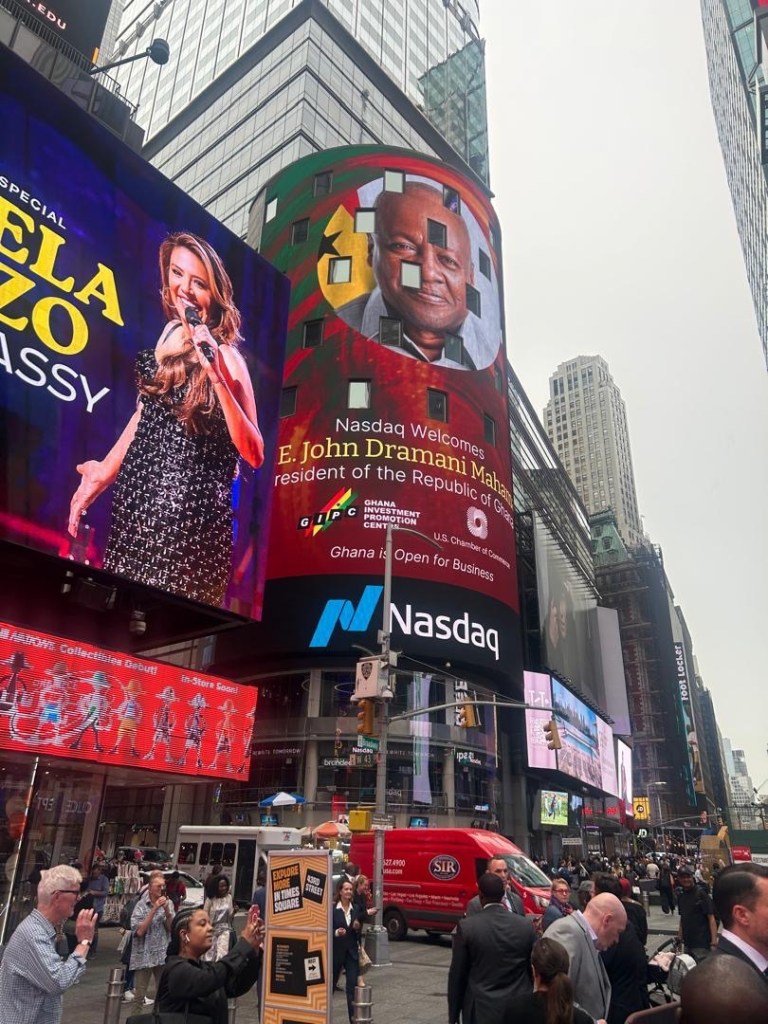
The delegation includes not only the requisite foreign minister but also the ministers of trade and health, the chief executive of the Ghana Investment Promotion Centre, and the President’s closest aides, including his chief of staff and spokesperson. This is not business as usual; it is a strategic deployment. The centrepiece of this effort will be President’s ringing of the NASDAQ closing bell: a clear signal that WE ARE OPEN TO DO BUSINESS with international investors.
This aggressive courtship is born of necessity. Ghana, long hailed as a beacon of stability and democracy in West Africa, has faced a brutal economic reckoning. Soaring inflation, a precipitous currency depreciation, and unsustainable debt levels forced the government into a $3bn bailout programme with the International Monetary Fund (IMF) in 2023. While the programme has provided a lifeline, restoring macroeconomic stability is a painful and incomplete process. The real, long-term solution lies in catalysing sustainable, private sector led growth. Hence, President Mahama’s mission to New York.
The strategy has a recent precedent. Visits to Japan and Singapore reportedly yielded significant investment pledges. The UNGA offers a far more concentrated arena to replicate that success, providing unmatched access to Fortune 500 CEOs, the heads of sovereign wealth funds, and other leaders with the capital to transform Ghana’s economic prospects. The focus is likely to be on sectors where Ghana holds comparative advantage: agro-processing, light manufacturing, technology services, and, crucially, the downstream value addition in its natural resources, from gold to lithium.
However, as any seasoned investor will note, the sizzle of a NASDAQ bell-ringing is meaningless without a credible steak. A strategic delegation signals intent, but it also incurs significant cost—a fact not lost on a Ghanaian public grappling with the austerity measures of an IMF programme. The government will be keenly aware that the optics of such a trip demand TANGIBLE returns.
The true test is not whether Mr. Mahama can secure handshakes and memorandums of understanding, but whether he can assure investors that Ghana is fixing the foundational issues that often deter capital. Investors will be asking tough questions: Is the judiciary truly independent and capable of enforcing contracts? Is the energy sector reliable and affordable? Is the bureaucracy streamlined and resistant to the corruption that still plagues many emerging markets? Most importantly, will the fiscal discipline demanded by the IMF hold after the next election?
Ghana’s democratic credentials and its role as a regional security anchor are powerful assets. But in the global competition for capital, stability is the baseline. The winning differentiators are transparency, efficiency, and profitability.
President Mahama and his high powered delegation are undoubtedly right to pitch Ghana’s story with vigour. The country’s potential is immense. But the most convincing arguments they can make in those New York meeting rooms are not about hope, but about evidence: evidence of a judiciary that works, of regulations that are fair, and of a government committed to being a partner, not a barrier to enterprise. If this delegation can secure investments that create jobs and diversify the economy, the cost of the trip will be forgotten. If not, it will be seen as just a waste of taxpayer’s money.
The hope for Mother Ghana rests not on the delegation’s size, but on the substance of the change it promises to deliver.
The National Chairman of the National Democratic Congress (NDC), Hon. Johnson Kwadwo Asiedu Nketiah, has issued a powerful reminder to the party leadership and members that political strongholds require constant nurturing and engagement, warning that complacency can lead to electoral setbacks.
Hon. Asiedu Nketia, National Chairman(NDC)
The Chairman made these remarks during his ongoing “Thank You Tour” of the Eastern Region, specifically addressing party faithful in the Krobo constituencies, which are traditional bastions of the NDC.
Employing a relatable analogy to underscore his point, Hon. Asiedu Nketiah stated, “Krobo Constituencies are our strongholds: if you have a wife but you don’t pay her visit often, be rest assured another man will take her from you. So we can’t stop coming to you.”
The comment, which was met with applause and cheers from the gathered supporters, emphasises the party’s renewed strategy of maintaining close contact with its base across the country, ensuring that the lines of communication remain open and that the party’s grassroots are consistently valued and heard.
The tour, which is aimed at thanking voters for their support in the 2024 elections, also served as a platform to commend the resilience of the Krobo people. Chairman Asiedu Nketiah expressed profound gratitude for the community’s unwavering support in the face of what he described as overt attempts to sway their votes.
“You have demonstrated that money couldn’t control your conscience by rejecting NPP for NDC. You put your differences aside and supported your MPs to win handsomely, we say thank you,” he declared, acknowledging the collective effort that secured parliamentary victories for the party in the area.
Looking ahead to the crucial 2024 general elections, the NDC National Chairman preached a message of unity, patience, and supreme focus on the ultimate goal: reclaiming political power.
He urged members to keep the party’s interests at the forefront, assuring them that loyalty and commitment would be rewarded. “Let us put the party first,” he advised. “Once your party is in government, your time will surely come. Today, it is someone’s turn, tomorrow will be you.”
He further starkly contrasted the prospects of being in government versus opposition, arguing, “Better to be in government without anything than be in opposition.”
Touching on a key concern for many Ghanaians, particularly the youth, Hon. Asiedu Nketiah promised that a future NDC government would prioritise job creation within the security services.
“We shall do our best to recruit more youth in the coming months,” he pledged, highlighting a potential policy direction aimed at addressing national unemployment.
He concluded with a call to action, urging for unwavering solidarity: “Let us all be patient and united than ever before and rally around the party to succeed.”
The message from the NDC Chairman signals a party actively reconnecting with its base, fostering internal unity, and building a compelling case for a return to government in 2028.







 Lord Fiifi Quayle