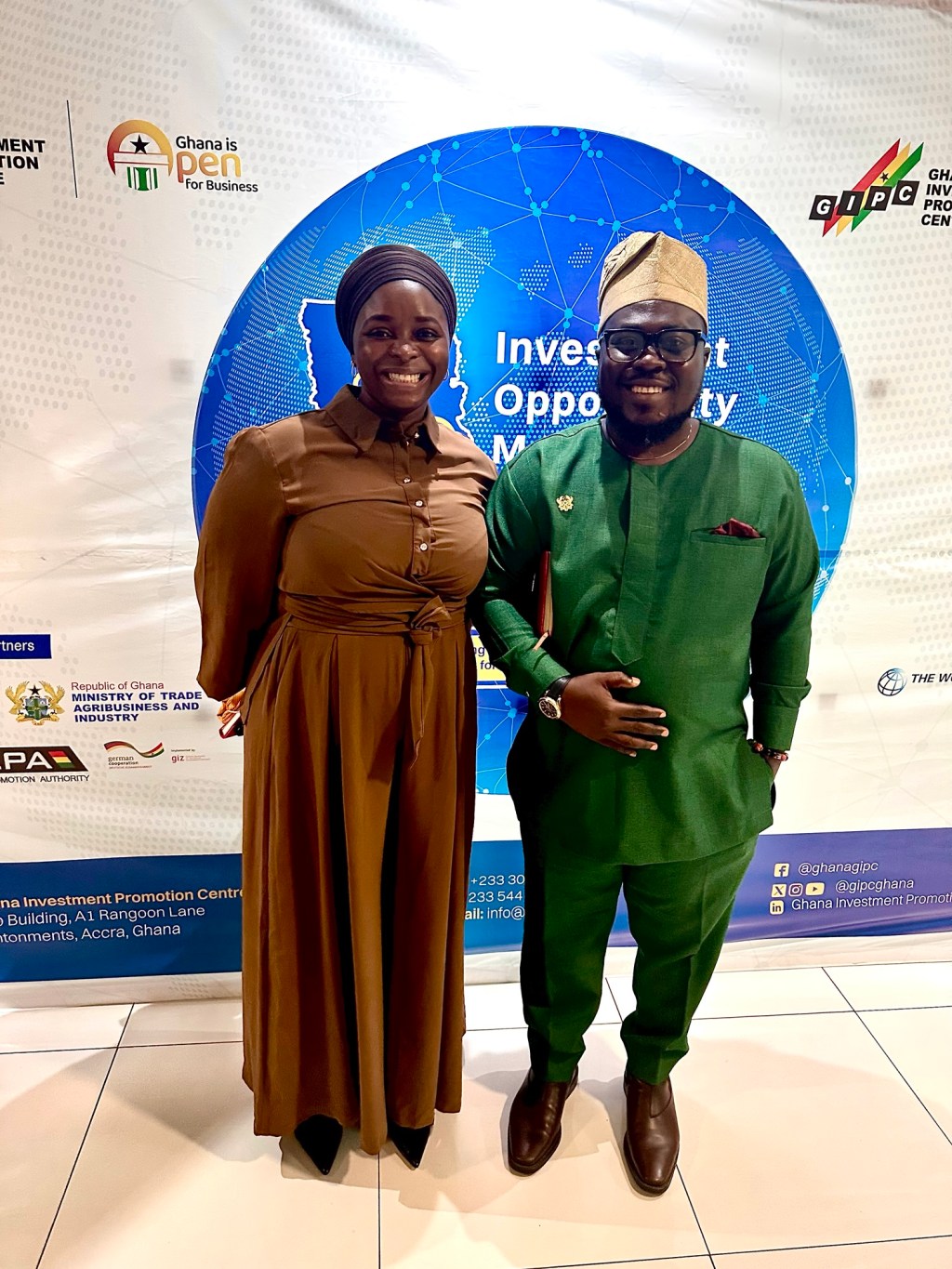
By Lord Fiifi Quayle
When the world’s eager gaze meets local inertia, even the most promising policy slogans can crumble at the arrivals hall. Ghana, a nation brimming with potential, has masterfully articulated its aspirations through powerful catchphrases:
“Open for Business.”
“24-Hour Economy.”
“Industrialisation.”
“Value Addition.”
These declarations resonate globally, echoing confidently in the corridors of power in Washington, London, Dubai, and Beijing. They captivate audiences at investment forums and multilateral gatherings, convincing international partners that Ghana is poised to transition from mere promise to tangible performance. And, to be unequivocally fair, this global interest is not just rhetorical; it is profoundly real.
The World is Knocking, But Is Anyone Home?
International partners are responding with genuine enthusiasm. Many are moving beyond mere Memoranda of Understanding or email exchanges; they are boarding planes, landing in Accra, and arriving ready to roll up their sleeves and work. The initial uptake the surge of interest and goodwill is undeniably strong.
However, a critical flaw emerges the moment these eager partners step onto Ghanaian soil: the system, designed to welcome and facilitate, often breaks down. The down-take the institutional capacity to absorb this interest, process it efficiently, and convert it into concrete outcomes proves to be tragically weak.
The Arrival Hall Dilemma
Prospective investors recount a consistent, independently verified narrative. They express interest through official channels, receive encouraging signals, and are often invited to explore partnerships within Ghana’s flagship programmes. Yet, upon their arrival, a disconcerting reality unfolds: no one is there to receive them. There’s no clear point of contact, no dedicated coordinating office, and crucially, no accountable officer to shepherd their process from initial interest to successful execution.
Instead, they are shunted from ministry to agency, from one desk to another, from inbox to an ever-growing pile of unanswered emails. Weeks turn into months. Phone numbers change, and the thread of responsibility dissolves into bureaucratic quicksand. This isn’t outright hostility; it’s something far more insidious: indifference disguised as bureaucracy. And indifference, it must be stressed, suffocates investment far more rapidly than policy uncertainty ever could.
Beyond Slogans: The Implementation Chasm
Ghana has become adept at launching ambitious programmes, generating international traction, interest, and even significant goodwill. Yet, the state machinery consistently falters at the crucial stage of implementation.
While uptake is robust, the down-take the institutional ability to effectively process and convert this interest into tangible results remains critically underdeveloped. A nation truly “open for business” is not defined by eloquent speeches or high-profile summits. It is defined by the seamless, efficient processes that kick into gear the moment someone declares, “We are interested.”
Who responds to inquiries?
Who coordinates internal efforts?
Who proactively follows up?
Who ultimately owns the file and ensures progress?
Too often, the answer to these fundamental questions is a resounding: no one.
The Missing Institutional Compass
This systemic breakdown points to a deeper governance issue: the lack of a clear, consistent orientation for government appointees. Ministers, CEOs, directors, and political heads are not merely appointed to oversee existing inefficiencies. Their mandate is to reorient and revitalize the institutions they lead. This reorientation demands explicit directives:
Every ministry and agency managing a flagship programme must establish a single, clearly identifiable nucleus office responsible for handling all expressions of interest.
This office must diligently track inquiries, coordinate internally, proactively follow up, and report on outcomes.
Investors and partners should never be left to guess who to contact or forced to chase files across disparate departments.
If prospective partners are left to search for the right person to speak with, the system has already failed.
Snail Mail in a Digital Age
The challenge isn’t a shortage of personnel; Ghana’s public sector is, in fact, heavily staffed. The real issues lie in deployment, skill sets, and a fundamental lack of seriousness. Many institutions continue to operate as if stuck in the 1990s:
Emails are often unmanaged.
Domains are poorly administered.
There’s a conspicuous absence of central CRM or tracking systems.
Critical correspondence frequently gets lost in personal inboxes.
Budgets allocated to rectify these basic operational deficiencies are often deemed “minimal,” even as bloated administrative structures are maintained. This is not a resource problem; it is, unequivocally, a priority problem.
Fixing this doesn’t require new slogans. It demands trained personnel, clearly defined workflows, modern digital tools, and unwavering accountability from the highest-ranking CEO to the most junior staff member.
The Unspoken Import Bottleneck
Nowhere is the contradiction between ambition and reality more stark than in the much-lauded “24-hour economy.” A truly functional 24-hour economy is inherently reliant on efficient imports:
• Seeds and seedlings
• Machinery
• Technology
• Spare parts
• Industrial inputs
• Services
Yet, Ghana lacks a single, cohesive institution responsible for coordinating imports from end-to-end. Consider the simple act of importing seed potatoes: phytosanitary permits are often unclear, agonizingly slow, or simply unavailable. Certificates are delayed, sometimes to the point where goods are shipped before documentation is resolved, rendering the paperwork meaningless.
The inevitable consequences are delays, significant financial losses, and profound frustration. How can a nation industrialize without reliable access to essential raw materials? How can production scale without predictable import systems? And how can a “24-hour economy” truly thrive when critical approvals cease at 4 p.m.?
The Real Question: Are We Home?
Ghana’s challenge is not a deficit of innovative ideas. Its true struggle lies in an entrenched inability to change what demonstrably does not work. We persist in maintaining broken systems, yet optimistically anticipate different outcomes. We announce sweeping reforms without genuinely reforming the underlying institutions. We celebrate international interest without cultivating the internal capacity to effectively receive and leverage it.
Being “open for business” is not merely a branding exercise; it is a rigorous operational discipline. Until Ghana commits wholeheartedly to:
Institutional Orientation: Clear mandates and processes for every agency.
Follow-Through: Ensuring commitments translate into action.
Digital Efficiency: Modernizing systems and workflows.
Import Coordination: Streamlining the flow of essential goods.
Accountability for Outcomes: Holding individuals and departments responsible for results.
The chasm between Ghana’s grand promises and its actual performance will continue to widen.
The world is indeed knocking. The pertinent question is no longer whether Ghana is open for business. The real question is: Is anyone truly home to answer the door?
 Lord Fiifi Quayle
Leave a comment