By Lord Fiifi Quayle
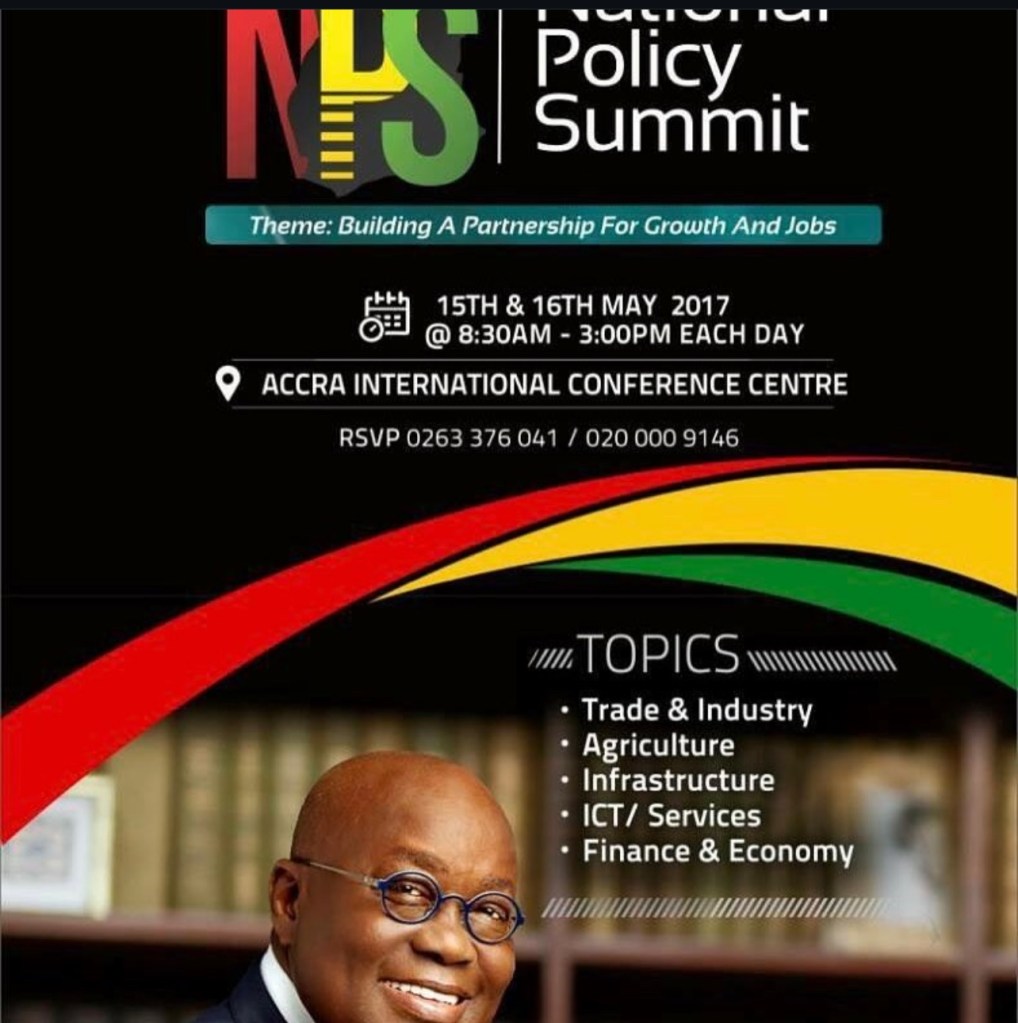
In our diverse realm of Ghanaian politics, the National Policy Summit (NPS) which was spearheaded by prominent figures such as Osafo Marfo, Ken Ofori-Atta, Kojo Oppong Nkrumah, and media personality Nana Aba Anamoah was aimed at addressing the pressing economic challenges facing the nation post 2016. However, as we analyze the outcomes of that summit, it becomes evident that it struggled to meet its ambitious objectives. In contrast, the National Economic Dialogue (NED) led by Dr. Ishmael Yamson, Dr. K.Y. Amoako, Professor John Gatsi, Muhammad Samara, Nelly Mireku, Anthony Sarpong, and Ernest De Graft Egyir presents a more inclusive and collaborative approach that could provide valuable lessons for future engagements.
The NPP’s National Policy Summit was designed to serve as a platform for key stakeholders, including government officials, business leaders, and civil society, to come together and discuss actionable policies aimed at stimulating economic growth and national cohesion. However, the execution of this vision was hindered by a perceived lack of inclusivity and engagement with grassroots voices. Many critics viewed the NPS as more of a political event than a genuine dialogue, raising questions about the government’s commitment to addressing the real issues faced by Ghanaians.
Notably, the leadership at the NPS, while experienced and knowledgeable, may have inadvertently created an echo chamber that did not fully capture the diverse perspectives needed to craft effective policies. The absence of a broader representation from various sectors of society, particularly marginalized groups, limited the summit’s potential to generate comprehensive solutions to the multifaceted economic challenges confronting the nation.
In contrast, the National Economic Dialogue, under the stewardship of respected figures such as Dr. Ishmael Yamson and Dr. K.Y. Amoako, aims to foster a more inclusive environment where all voices can be heard. This dialogue seeks to engage a wide range of stakeholders, including civil society organizations, academia, and the private sector, to collaboratively identify and address the economic issues that affect Ghanaians at all levels. The emphasis on inclusivity and transparency in the NED is a crucial element that enhances its credibility and effectiveness.
To ensure that future dialogues do not suffer the same fate as the National Policy Summit, several key recommendations can be made:
1. Broaden Participation: Future summits should actively seek to include a diverse array of participants, especially those from marginalized communities, youth, and women. This will not only enrich discussions but also ensure that policies are reflective of the needs and aspirations of the entire population.
2. Enhance Transparency: Clear communication regarding the objectives, processes, and expected outcomes of dialogues is essential. Regular updates and feedback mechanisms can help build trust and demonstrate a genuine commitment to public engagement.
3. Prioritize Active Listening: Create spaces for open dialogue where citizens can voice their concerns and suggestions. This approach fosters a sense of ownership and encourages collaboration between the government and the populace.
4. Commit to Follow-Through: Establish systems to track the implementation of policies developed through these dialogues. Public reporting on progress will help maintain accountability and ensure that commitments are honored.
5. Encourage Collaborative Partnerships: Foster synergies between government, the private sector, and civil society organizations to leverage resources and expertise in addressing economic challenges.
In conclusion, while the NPP’s National Policy Summit was aimed at addressing critical economic issues, its execution fell short of expectations. On the other hand, the National Economic Dialogue, spearheaded by respected professionals like Dr. Ishmael Yamson and Professor John Gatsi, exemplifies a more inclusive and collaborative approach. By embracing the lessons learned from the National Policy Summit, the NDC can revitalize its engagement with the Ghanaian populace, restoring public confidence in its ability to tackle the pressing economic challenges that lie ahead. Only through genuine collaboration and commitment can we hope to build a sustainable path toward growth and prosperity for all Ghanaians.

 Lord Fiifi Quayle
Leave a comment