By Lord Fiifi Quayle, Richeal A.(LLM) & Associates
In a recent opinion piece, Martin A. B. K. Amidu has launched a scathing critique of Speaker Alban Sumana Kingsford Bagbin, accusing him of disobedience towards the Supreme Court and suggesting that this defiance will leave long-lasting scars on Ghana’s parliamentary democracy. While Amidu’s sentiments may resonate with some, a closer examination of his assertions reveals a narrative steeped in political opportunism rather than a balanced analysis of the facts.
Misinterpretation of Judicial Authority
First and foremost, Amidu’s assertion that Speaker Bagbin’s actions constitute a blatant disregard for the Supreme Court’s orders overlooks the complexities inherent in the legislative process. The role of the Speaker is not merely to act as a puppet of the judiciary but to ensure that parliamentary proceedings reflect the will of the people and the Constitution. The Speaker’s interpretation of Article 97 (1)(g) and (h) was grounded in a legitimate understanding of parliamentary procedure, and his actions were aimed at preserving the integrity of the legislative process rather than undermining it.
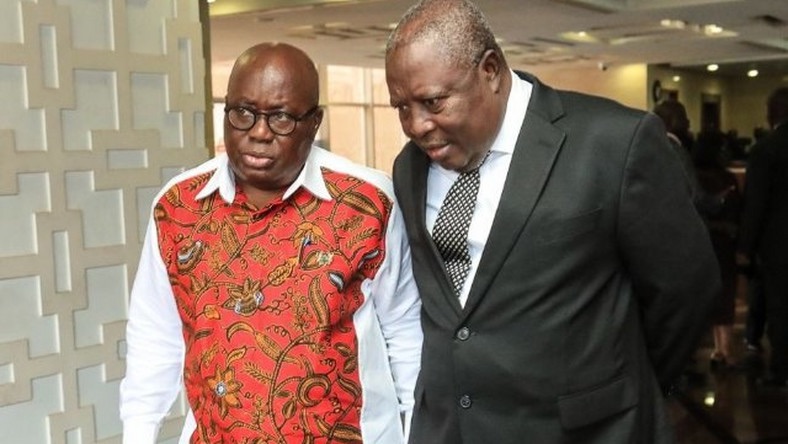
Amidu claims that the Speaker should have complied with the Supreme Court’s orders without question, yet this perspective fails to acknowledge the principle of checks and balances that underpins our democracy. It is crucial to recognize that the judiciary and the legislature must engage in a dialogue that respects their respective roles, rather than fostering an adversarial relationship that Amidu seems to advocate.
The Question of Timing and Context
Amidu’s critique is further weakened by his failure to consider the broader context of the political landscape in Ghana. The events of October and November 2024 were not merely isolated incidents but part of a larger struggle for power and representation in a deeply divided Parliament. By framing Speaker Bagbin’s actions as a personal affront to the judiciary, Amidu ignores the legitimate concerns raised by the Minority about the representation and rights of their constituents.
Moreover, his claim that the Speaker’s refusal to comply with the Court’s orders has disrupted parliamentary business is an oversimplification. The political climate in Ghana has been fraught with tension, and it is disingenuous to place the blame solely on the Speaker. The interplay between the NDC and NPP has historically been contentious, and attributing the dysfunction solely to Bagbin’s actions disregards the systemic issues that have long plagued our political landscape.
The Legacy of Leadership
Amidu’s assertion that Speaker Bagbin has squandered valuable parliamentary time and failed to act with maturity is a striking contradiction. As a seasoned politician with decades of experience, Bagbin has demonstrated a commitment to his constituents and the democratic process. His willingness to stand firm on issues of principle, even in the face of significant pressure, is a hallmark of true leadership.
Rather than portraying Bagbin as a figure of ridicule, we should recognize his efforts to navigate the murky waters of Ghanaian politics. His actions, though controversial, stem from a desire to uphold the values of democracy and representation. It is essential for young politicians to see that leadership often requires making difficult choices, particularly in a landscape fraught with political opportunism.
A Call for Constructive Dialogue
Whiles Amidu’s critique of Speaker Bagbin may appeal to those seeking to vilify a political opponent, it ultimately falls short of providing a constructive analysis of the situation. Instead of perpetuating a narrative of division and conflict, we should encourage dialogue and collaboration among all political actors. The future of Ghana’s democracy depends not on discrediting individuals but on fostering a political culture that values cooperation, respect for the rule of law, and the voices of all citizens.
It is time for all political leaders, including Amidu, to rise above opportunism and work towards a united Ghana, where the principles of democracy are upheld, and the interests of the people take precedence over personal ambitions. Only then can we create a legacy that the youth can truly emulate and learn from.
GHANA MUST WORK AGAIN
 Lord Fiifi Quayle
Leave a comment