By Lord Fiifi Quayle
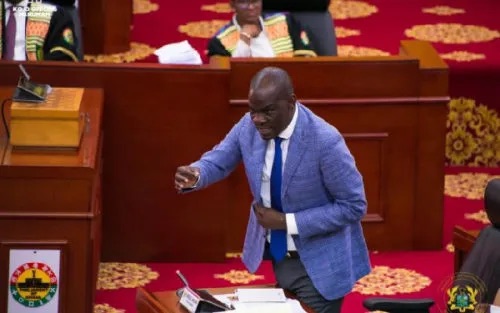
In a significant shift in Ghana’s parliamentary landscape, the National Democratic Congress (NDC) has officially claimed the majority in Parliament as of Thursday the 17th of October 2024. This development follows the decision of four Members of Parliament (MPs) who chose to run as independent candidates, prompting a ruling from the Speaker of Parliament that has ignited a legal and political firestorm.
Today, the Speaker ruled in favor of the NDC, which argued that the independent candidacies of the four MPs constituted an automatic forfeiture of their party rights, the 4 members of parliament made up of 3 NPP members and 1 NDC member. Citing a precedent set by former Speaker Mike Ocquaye regarding the disqualification of Hon Asiamah MP for Fomena in a similar situation, the Speaker’s decision was based evidence available and a petition presented to by Hon. Haruna Iddrisu. The ruling stated that according to the constitutions of various political parties, any member who opts to contest as an independent candidate while their party has a candidate in the same constituency is automatically disqualified from their party affiliation. This disqualification, the Speaker noted, takes effect immediately, even if the contest pertains to the next Parliament.
The New Patriotic Party (NPP), now in the minority in Parliament, has filed a petition with the Supreme Court to contest the Speaker’s decision. Party officials argue that they did not formally notify the House regarding the status of the independent candidate, and therefore, the Speaker cannot assume that the candidates have been dismissed from the party, unlike the situation involving Hon. Asiamah, the former Fomena MP.
Critics have accused the NPP of hypocrisy in this matter, arguing that the party has remained silent when similar situations have worked to their advantage in the past. It was under the NPP’s own precedent that the Speaker made his ruling, raising questions about the party’s sudden opposition now that the tables have turned.
Legal experts suggest that the Supreme Court may be reluctant to hear this case, especially in light of several highly controversial matters currently pending before the court, including issues related to LGBTQ rights. The court’s decision on this matter could set a precedent that significantly impacts Ghana’s democratic processes and the rules governing party affiliation and candidacy.
As the political landscape continues to evolve, the implications of the Speaker’s ruling are profound. Observers note that the interpretation of this case will not only affect the immediate composition of Parliament but could also influence the broader discourse on party loyalty and electoral integrity in Ghana.
The NDC’s newfound majority comes at a time of heightened political tension, and both parties are bracing for the potential fallout from the Supreme Court’s involvement. Whatever the outcome, this case is poised to play a crucial role in shaping the future of Ghana’s democracy.
ALL HOPE IS NOT LOST
 Lord Fiifi Quayle
Leave a comment